

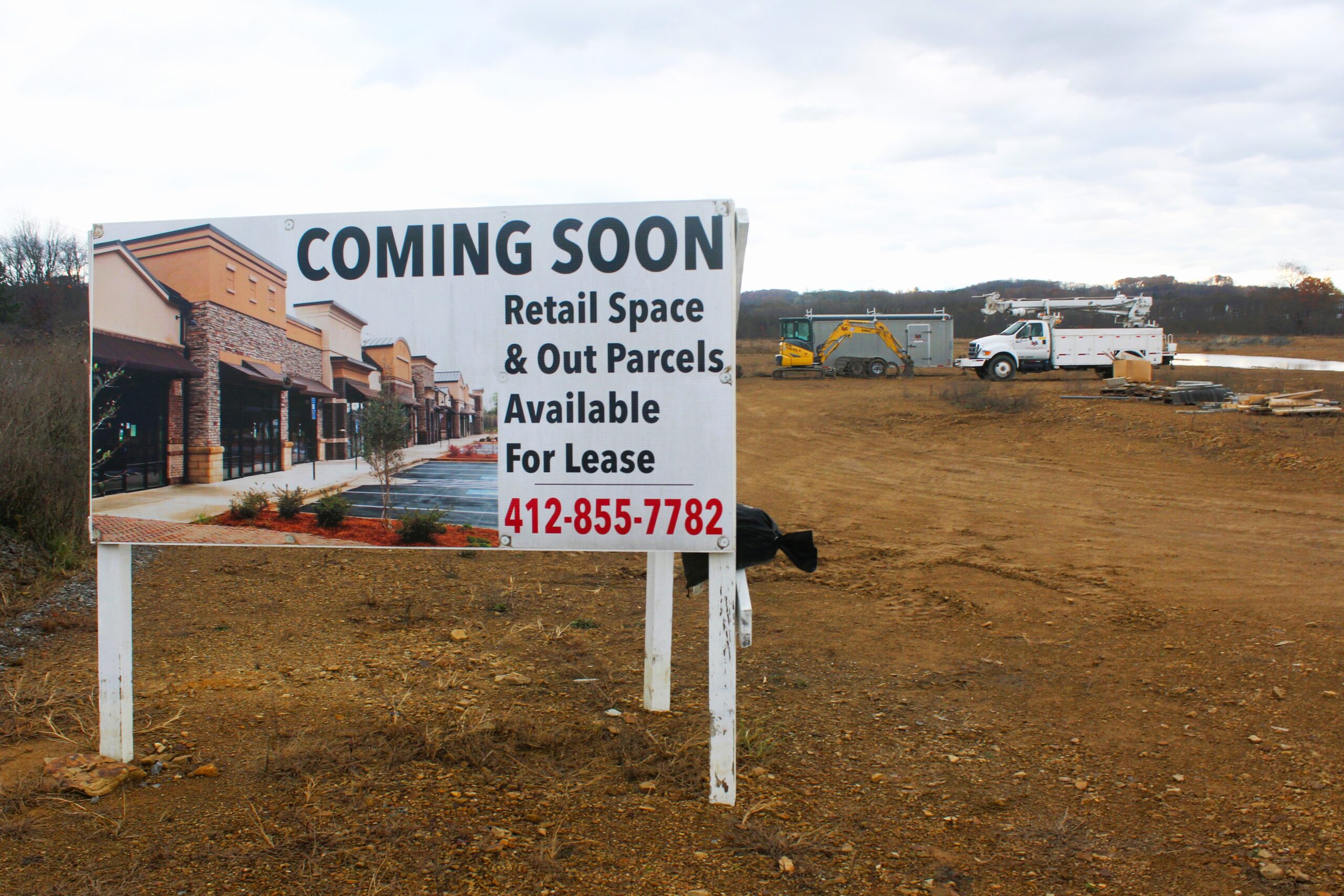
The Amber Grove development—proposed off Route 228 in Middlesex Township—has traveled a long and winding road since its first application was filed in June 2022. What began as a traditional mixed-use plan of 52 townhomes and 36,000 square feet of retail/office space ultimately evolved into an all-residential project with nearly 80 townhomes and no retail at all. Along the way came legal disputes, an ordinance change, and a debate over whether two neighboring developments should be physically connected.
To help residents understand what happened and what comes next, The 228 Times spoke with Middlesex Township Manager Jeff Winkle, as well as developers Mike Greca of Penn Acres LLC (Amber Grove) and Frank Zokaites of Sienna Village, both of whom offered insight into how the process unfolded.
A Timeline Defined by Change
Amber Grove submitted its first plan in June 2022. At that time, the Route 228 Overlay Ordinance required that streets in new developments be interconnected with streets of neighboring developments—but it did not specify whether those connections had to be public or private.
Sienna Village, which sits beside the Amber Grove property, planned to build private internal roads. According to Winkle, legal precedent in Pennsylvania suggested that a township cannot require a developer to open a private road for public connectivity, because forcing access to private property can be considered a taking, requiring government compensation.
In September 2022, the Township amended the ordinance (Ordinance 137) to clarify that only public streets may be required to connect, removing the ability to mandate connections across private roads.
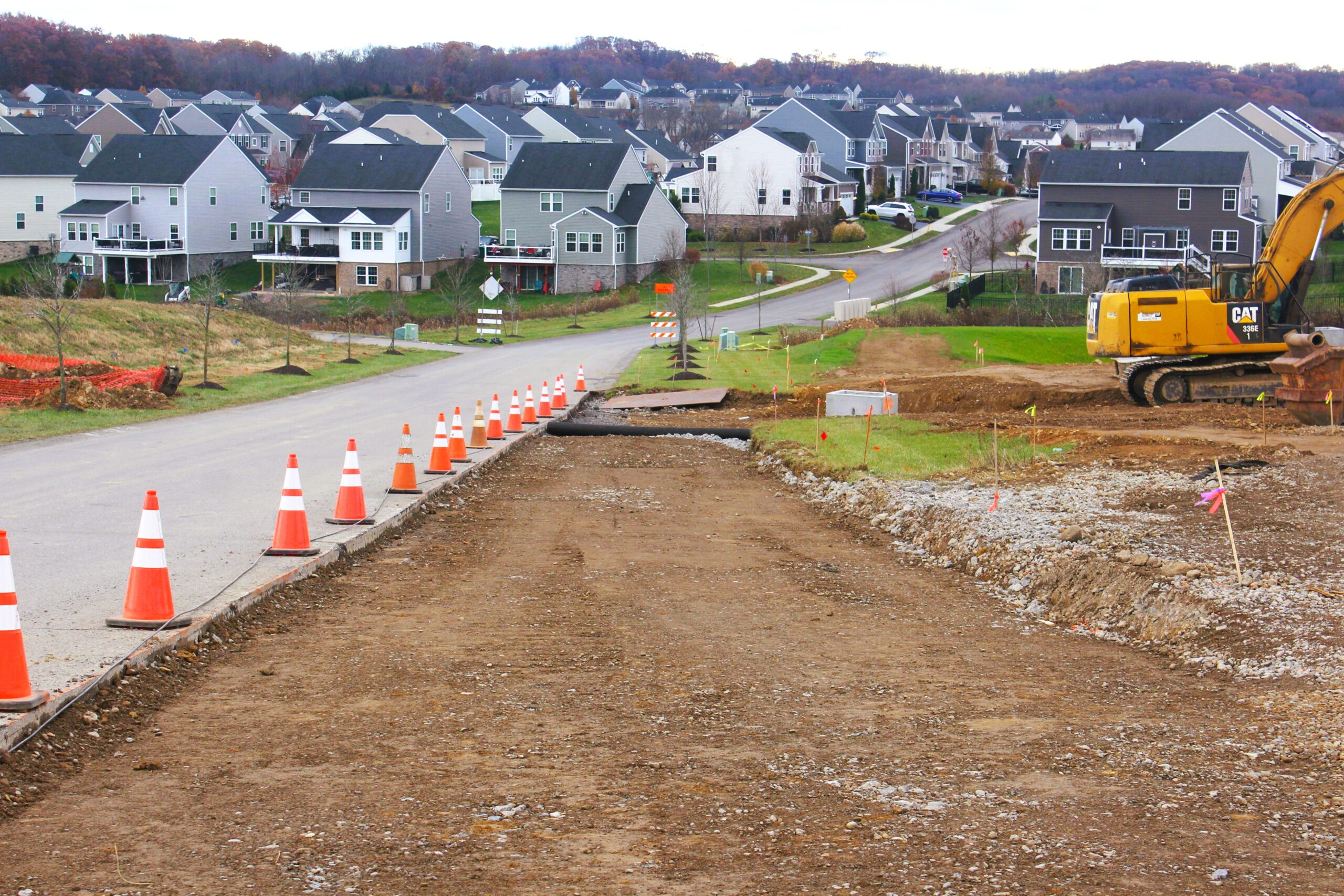
This change had enormous implications for Amber Grove: without a connection through Sienna Village, its access to Route 228 would be limited to a right-in, right-out intersection, reducing the ability for residents to reach the Weatherburn Drive traffic signal.
Winkle noted that the timing of the ordinance change was especially challenging for both developers “Development planning typically begins early in the long submittal and review process,” he explained.
Greca added that Independence Excavation’s ongoing work on Route 228 has also shaped the project’s timing. He said Amber Grove “is a parcel that Independence Excavation utilized as a staging area for the widening of 228,” and noted that because Independence is now wrapping up its work, Penn Acres anticipates “bringing to market Amber Grove in 2026–2027.” He described the project timeline as currently fluid but emphasized that “it is an interesting concept” that will move forward once site conditions fully transition back to the developer.
The Legal Dispute: “The Township Found Itself Between a Rock and a Hard Place”
Once Sienna Village declined to build a public street connection, Amber Grove’s developer—Penn Acres LLC, led by Mike Greca—filed suit against both the Township and Sienna Village.
Amber Grove argued that:
– It expected a connection based on the ordinance language at the time of its 2022 submission.
– Changing the ordinance mid-process harmed its development plan.
– Sienna Village’s position was that a connection could be provided if Amber Grove contributed toward the cost of the new traffic signal installed at Weatherburn Drive and Route 228. According to Frank Zokaites, Sienna was willing to build a connector road if Amber Grove agreed to pay a prorated share — approximately two-thirds — of the $620,000 signal cost. Greca declined the proposal and instead revised the Amber Grove plan, removing the commercial component and increasing the total number of units to 80 residential townhomes based on resident feedback.
According to Winkle, “We got put in the middle between Sienna and Amber Grove… The Township found itself between a rock and a hard place.” The dispute cost the Township “thousands” in legal fees, though Winkle did not provide an exact figure.
Ultimately, the lawsuits were dropped after Amber Grove submitted a revised plan—one that removed the commercial space and built a private loop road with no physical connection to Sienna Village.
The Final Plan: 80 Townhomes, No Retail, No Connection
Under the approved plan:
– Amber Grove becomes a private, looping internal road network serving roughly 80 townhomes.
– Sienna Village remains a separate, private-road development.
– No public or private road will connect the two.
Each development will maintain its own roads. The Township is only responsible for Weatherburn Drive, a public street connecting to Route 228.
A traffic study for the original mixed-use plan showed higher projected traffic volumes compared to the updated all-residential proposal. Winkle said that “with the deletion of the commercial/retail to all residential, the traffic impact will be significantly less,” noting that the original retail component would have generated roughly 700 more weekly PM peak trips than the residential-only design.
Developer’s Perspective: “We listened to the Community”
In response to questions about why the commercial component was removed, developer Mike Greca said the decision was driven largely by public input:
“Amber Grove is a project that is a good example of incorporating public sentiment into design,” Greca said. “Ultimately, the final design is based on feedback from the local community and working collaboratively with the community and the township. The unifying message collectively was to forgo a mixed-use plan which would have incorporated commercial elements and to see the property as a high-end residential-only plan. We were motivated by the sentiment, and we believe we created a plan that is responsible and appropriate for the location.”
Greca added more context: Residents, township officials, and neighboring property owners expressed concerns about adding more commercial space to an already crowded stretch of Route 228 and Route 8. He said the collective view was that carving out additional commercial lots “was starting to be viewed as oversaturation and too much of a good thing.”
He noted that “overwhelmingly the public voted with their feet,” and said Greca was “happy to collaborate and incorporate the feedback from our neighbors, the residents and the township and reach a final product with Amber Grove that everyone can be proud of.”
“Amber Grove is an exciting new development that achieves the goals of many of the townspeople and neighbors who inspired the progression to what it is today,” he added.
A Bigger Question: What Does This Mean for Future Development?
While broader housing discussions in Butler County often focus on affordability, the growth pressure along the Route 228 corridor has created a different kind of demand — particularly for higher-end townhomes and low-maintenance patio homes. Middlesex and Adams townships are now among the county’s fastest-growing areas, attracting empty nesters, young professionals, and relocating families who want modern layouts, first-floor living options, and HOA-managed upkeep. Developments like Sienna Village and the proposed Amber Grove target this very segment, where absorption rates have remained strong and recent sales have shown that supply continues to lag behind buyer demand. For that reason, developers argue there is still room — and a market — for additional communities of this type along the 228 corridor.
What Residents Asked at the Last Meeting
Winkle said the most recent public meeting saw a high turnout—not necessarily from anger, but from curiosity. Some residents questioned whether the developer could simply abandon the land designated for commercial development, retaining the original 52-unit plan.
Winkle explained: “He’s in the business of developing. I don’t know any developer who just forfeits land because residents don’t want it developed.”