

The 228 Times Staff with reporting contributions by Ian Schauble
MARS — It didn’t rain on the Mars Fourth of July Parade, but the weather still managed to delay it by an hour.
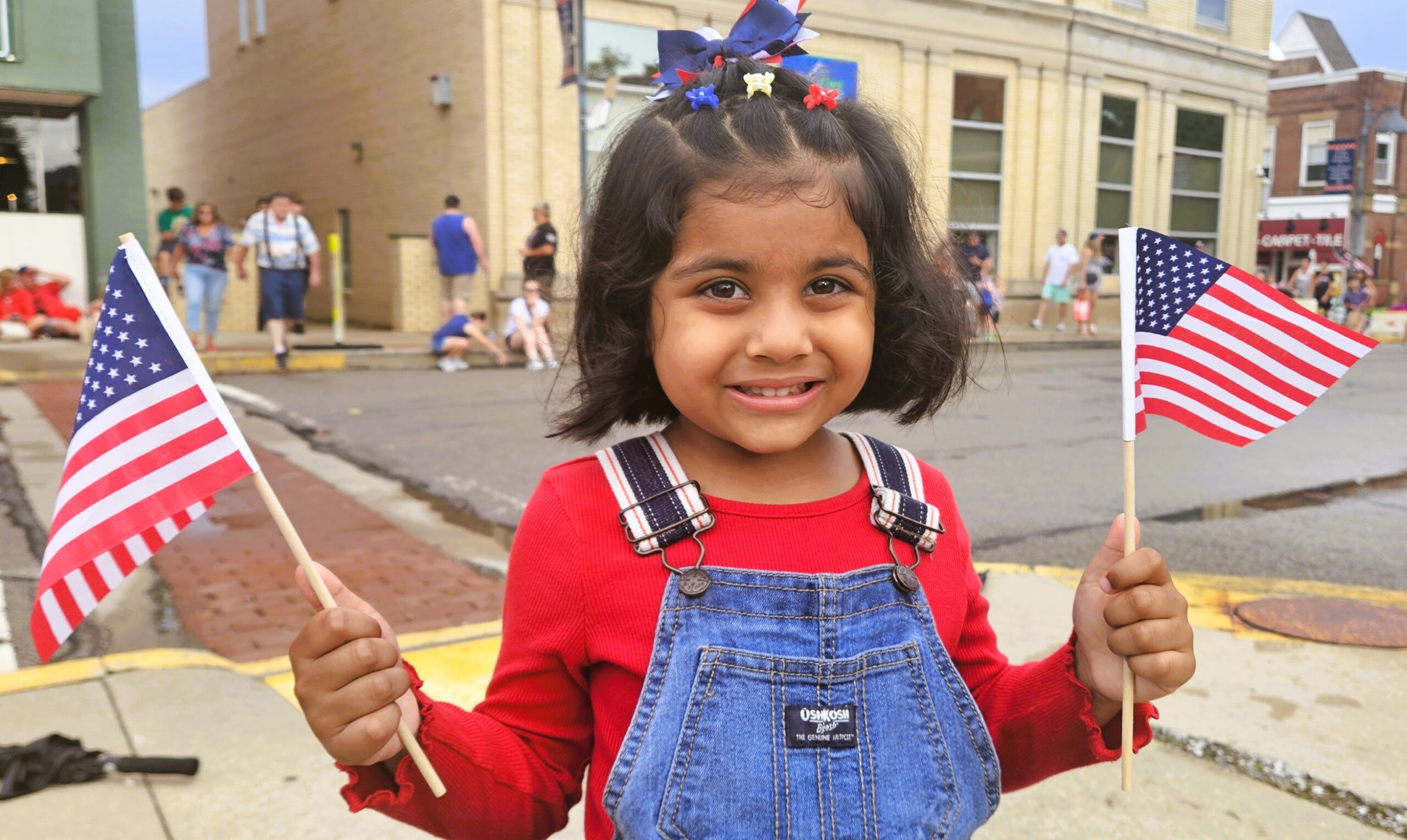
Strong storms moving through the region pushed back the start of Saturday evening’s parade, but once the threat passed, families again lined the streets of downtown Mars as children on decorated bicycles and scooters, fire trucks, community organizations and patriotic characters made their way through town.

The parade was one of the final chapters of a two-day Independence Day celebration that blended small-town traditions with reflections on local history, Native American culture and the nation’s 250th anniversary.
For Mars Mayor Gregg Hartung, the celebration was about more than marking a milestone.
“We’re hoping that if we do things right, we’ll be around for another 250 years,” Hartung said. “I think the community is where we bring our values to everything we do. If it goes up the ladder, it helps to change things at the county, state and federal levels.”
The July 3-4 celebration brought activities to downtown Mars, Marburger Field and several of the borough’s historic landmarks.
Festivities began Friday with tours of the Mars Area History & Landmarks Society’s train station museum.
Friday evening’s activities moved to Marburger Field, where the borough recognized two men whose lives became part of the community’s history.
Chester Marburger, the longtime Mars postmaster and accomplished local athlete who later managed area baseball teams to numerous county and regional championships, was remembered for his contributions to the community.
The borough also paid tribute to Carl Wood, a Mars Area High School football standout who later served his country as a Tuskegee Airman during World War II. A permanent tribute recognizing Wood’s military service is displayed at the Mars Veterans of Foreign Wars post on Mars-Valencia Road.
Families spent the evening participating in youth sports activities and traditional games while food trucks served visitors at the field.
But one of the evening’s most distinctive moments came when members of the Council of Three Rivers American Indian Center shared songs, dances and cultural traditions with the community.
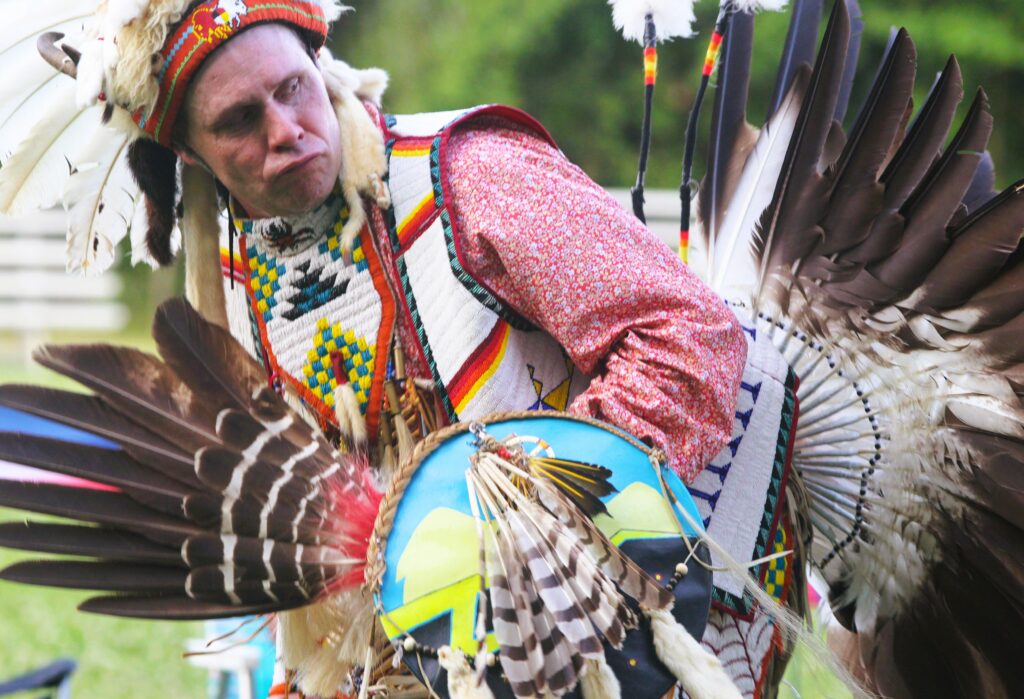
The group included members with Mohawk, Cheyenne River Sioux and Seminole heritage, who explained that the program presented intertribal dance styles rather than dances belonging to a single tribe or nation.
Mike Sims, the group’s cultural coordinator, told the audience that the presentations are about more than performance.

“We’re here to give you guys a little bit of insight of some of our Native American culture that still lives on today, and we’re passing down to our youth,” Sims said.
Children and grandchildren participate alongside adult family members, he explained, making the dances part of the way cultural traditions are shared between generations. The presentation also emphasized the diversity among Native American nations, noting that more than 570 tribes are federally recognized in the United States.
Hartung didn’t remain on the sidelines for the entire performance.
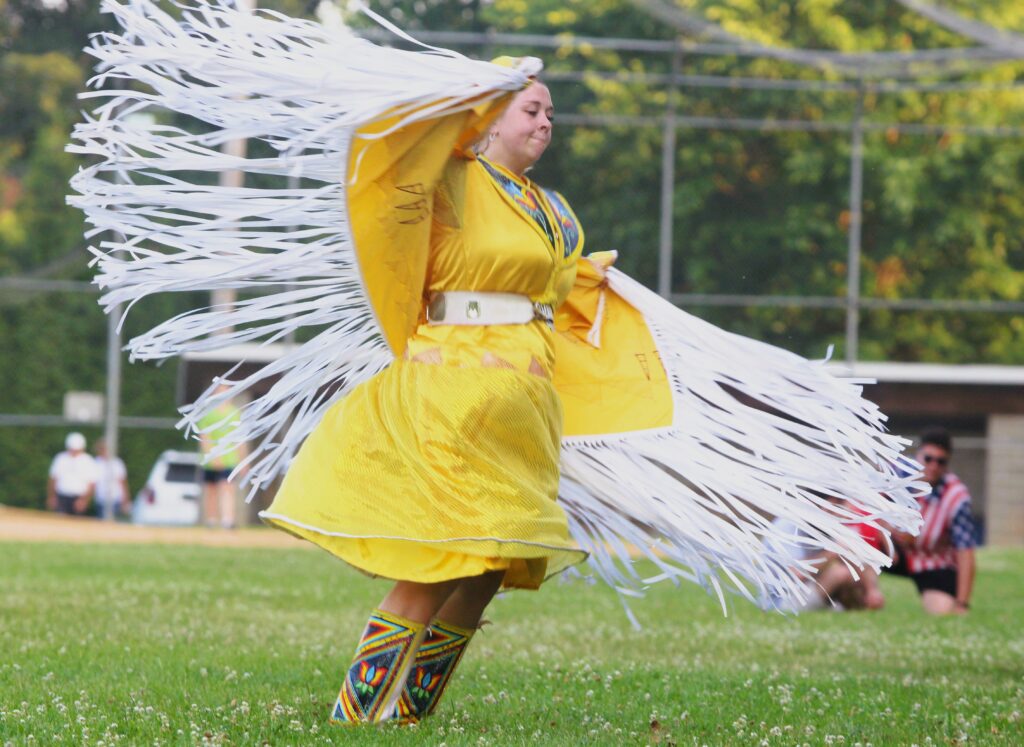
Asked the following day about his favorite part of the weekend, the mayor recalled joining one of the dances.
“Dancing in the Native American dance last night,” Hartung said. “I danced with them and did the circle bounce dance with them, and I said that one last bounce took me out of the circle.”
Saturday morning, the celebration moved from Marburger Field to downtown Mars, where history and patriotism came together beside one of the borough’s most recognizable landmarks.
Residents gathered near the USS Mars ship’s bell in downtown Mars for the dedication of a new 27-foot flagpole funded by the Rich-Mar Rotary Club and the Mars Area History & Landmarks Society.
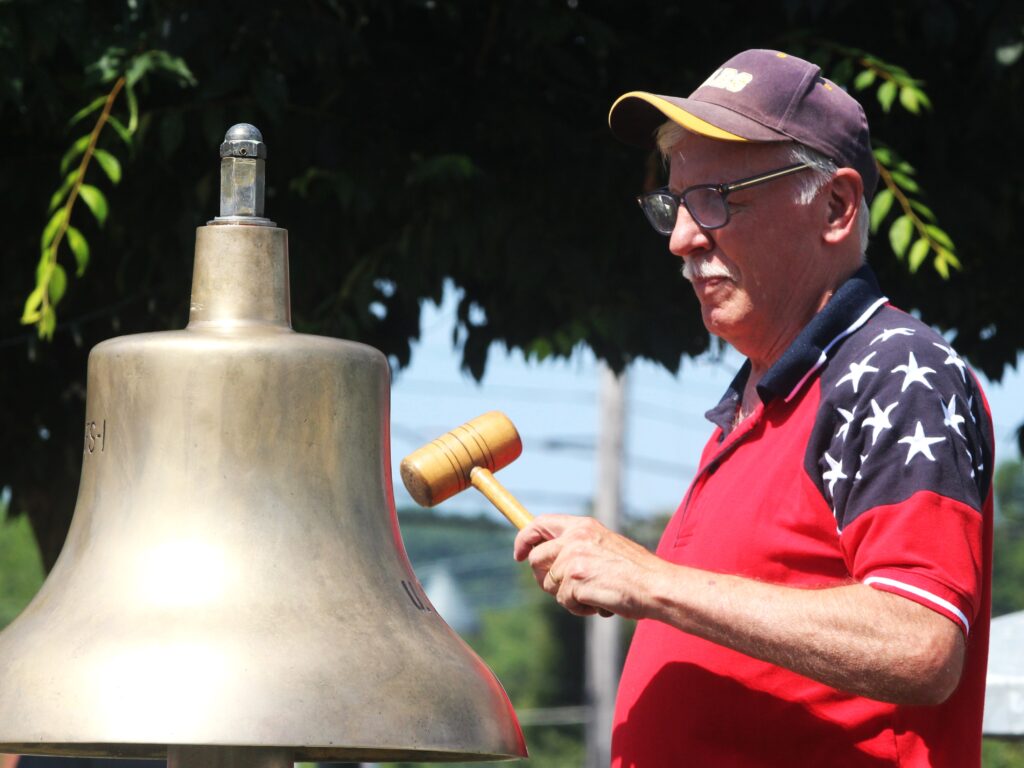
As part of the nationwide Bells Across America ceremony marking the nation’s 250th anniversary, Hartung struck the USS Mars ship’s bell 13 times—once for each of the original colonies.
The sound of the bell connected the nation’s history with a piece of Mars’ own.
The USS Mars was a U.S. Navy combat stores ship that served during the Vietnam War era. Former Mars Mayor Dick Settlemire helped bring the ship’s bell to the borough in 2006, creating one of the town’s most recognizable landmarks.
John Watson of the Mars Area History & Landmarks Society said Settlemire went through the effort of tracking down the bell and bringing it to the community.
“I think it’s been a great asset to the town,” Watson said.
The ceremony also remembered Settlemire’s broader role in shaping the borough’s Independence Day traditions, including his efforts to restore the community’s fireworks display through private sponsorships rather than taxpayer funding.
“Dick was a good friend whose dedication set a precedent for celebrating the unique charm, small-town identity and history of Mars,” Hartung said.
That sense of small-town identity carried throughout the weekend.
Families visited vendors and downtown businesses, children enjoyed activities and a petting zoo, and residents gathered along the parade route despite the weather delay.
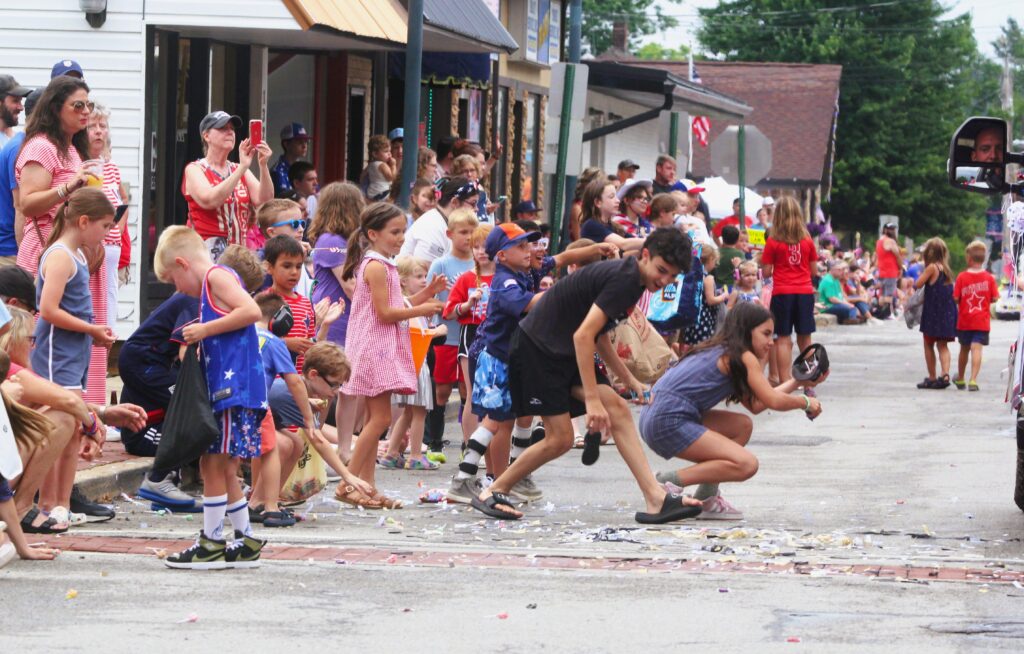
Jim Kirchner of the Rich-Mar Rotary Club said the parade remains one of his favorite parts of the celebration.
“I just think the parade is such a great thing,” Kirchner said. “It shows how vibrant and old-time community we really are.”
For Hartung, the spaceship, USS Mars bell and newly dedicated flagpole all represent pieces of a larger community identity.
“There’s a lot of pride in this community,” Hartung said. “I think people with that type of community pride, and an interest in preserving and keeping a small-town feel … is really genuine. And it’s that small-town American sort of approach to life.”

After the delayed parade made its way through downtown, the celebration returned to Marburger Field for a community cookout before the weekend concluded with fireworks after dark.
For two days, the nation’s 250-year story was told in Mars in many ways: through the history of a Tuskegee Airman and a Navy ship’s bell, through Native American songs and dances passed from one generation to another, through 13 strikes of a bell for the original colonies, and through children waving flags along the streets of a small Western Pennsylvania town.
See more moments from Mars’ two-day Fourth of July celebration in our complete photo gallery: https://228timescom.shootproof.com/gallery/e19bdae6-da93-49b8-b89b-1f5382771531