

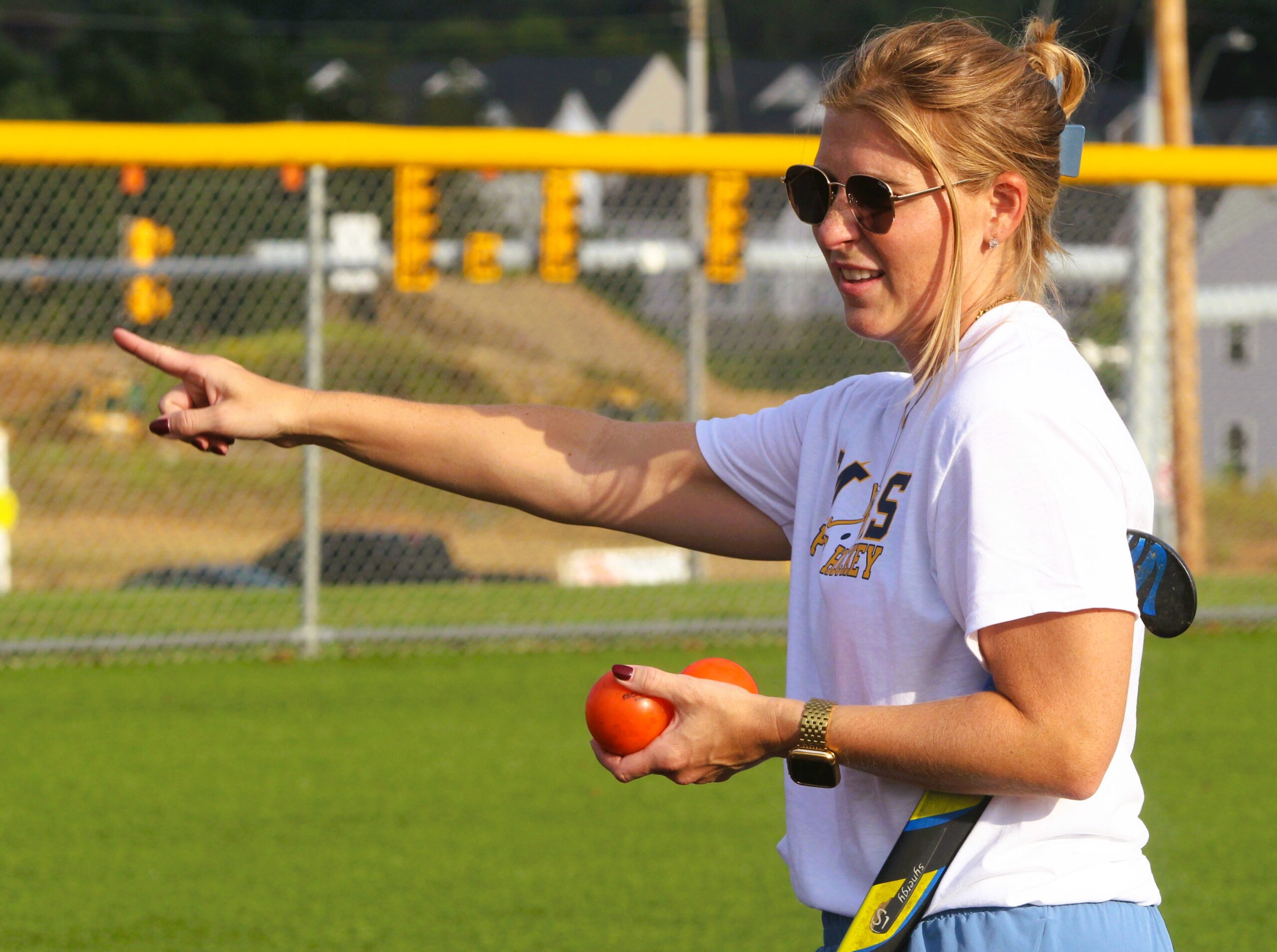
At a recent practice on the Mars Area softball field, girls field hockey players worked through drills on a field without field hockey lines.
There are no substitutes waiting on the sideline.

What the Mars girls do have is something considerably harder to measure.
Grit.
For head coach Lauren Billinger, that may be the best argument yet for a young program trying to prove it belongs.
Fall 2026 is the first season for the Mars Area high school girls field hockey club and the second for its middle school club. The program is working toward its next major step: becoming a district-sponsored sport. And while that decision ultimately reaches beyond wins, losses and goals scored, Billinger believes her players are building their case every time they pick up a stick.
“I’m most proud of the girls who said, ‘Hey, I want to be part of something new,’” Billinger said. “Some of them are returning, but the majority of them have never picked up a field hockey stick. It’s so brave to say, ‘OK, I’m going to do this. I’m going to come out and play something that I’ve never played before.’”
Our conversation reminded me of how the Mars Youth Lacrosse Association started with the original 43 boys taking a chance on a new sport.
That willingness to try something unfamiliar has become the foundation of the field hockey program.
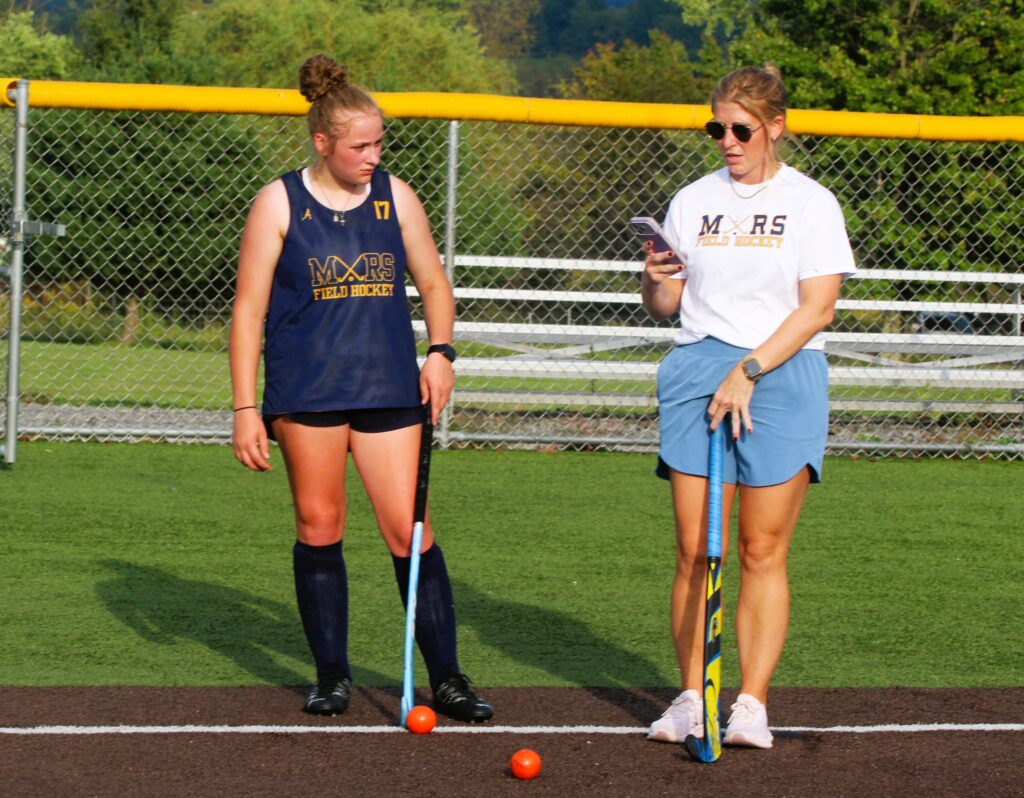
Starting From the Ground Up

“We are working hard to grow our feeder program to help build a foundation for the future,” Billinger explained.
In 2025, Mars added a middle school field hockey club. The district described that first season as creating a “foundation for the future,” with the middle school team competing against programs including North Allegheny, Fox Chapel, Pine-Richland and Peters Township.
For Billinger, that’s important because establishing a sustainable high school program isn’t simply about finding enough players for one season. It’s about creating a path for a second season, a fifth season and eventually a program that younger athletes grow up wanting to join.
“We still need to promote the sport,” Billinger explained. “We still need to encourage girls that it’s OK if you haven’t played before. We need you. We want you. We want you to be part of building something.”
No Bench, No Excuses

Think about that for a moment.
In a sport built around constant movement, Mars players don’t always have the luxury of looking toward the sidelines for a replacement when their legs get heavy. Billinger said there have been times when the team played without substitutes or even competed with a player down.
The girls keep playing.
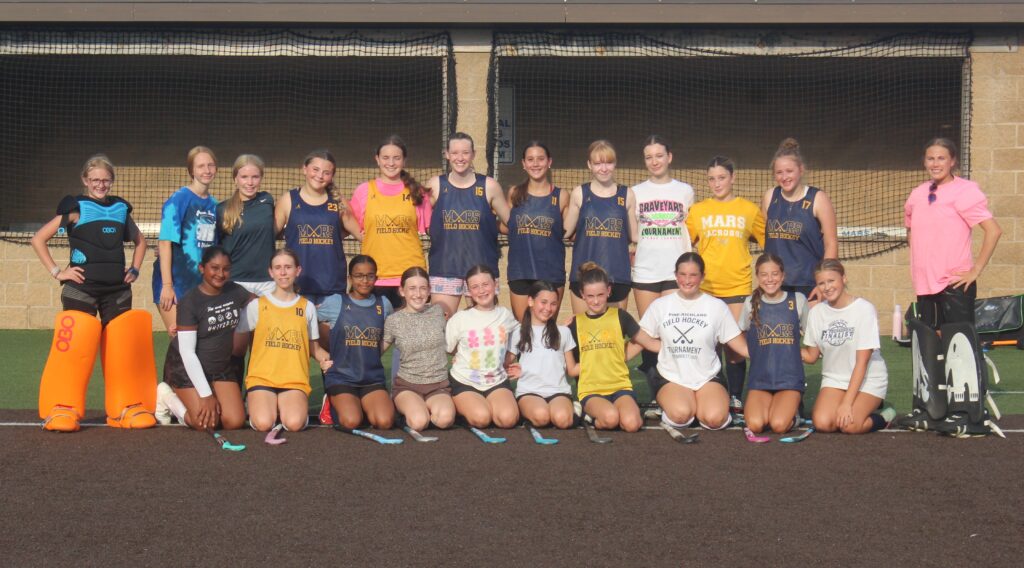
The small roster shows both how far the new high school team has come and the challenge ahead: attracting enough players to sustain it beyond its first season.
High school team members include junior Olivia Paugh; sophomores Annabelle Cox and Madelyn Gallagher; and freshmen Alena Salvini, Lucy Lovig, Mary Rhenish, Piper Hartge, Quinn McNichols, Rebecca McGrath, Riley Edler and Tessa Varner.
“I don’t think I came into the season realizing the grit that was really there,” Billinger said.
The word “grit” kept coming up in our conversation. But Billinger doesn’t want her team defined solely by toughness.
“We include each other. We’re one. We do things together,” she explained. “We are there for each other. When they’re walking in the hallway, they know there’s other girls that care about you.”
The returning players have taken on leadership roles to help their younger teammates.
“They have stepped up in tremendous ways,” Billinger said. “They’ve spread the word, bring a hard work element for the girls to look up to.”

Those lessons aren’t exclusive to field hockey. They’re among the reasons high school athletics exist in the first place.
Then, gradually, a collection of girls learning a new sport starts becoming a team.
The Challenges of Being a Club
For all the progress, there are practical differences between building a club program and operating as an established school sport.
Field access is one. Scheduling is another.
The first thing that struck me as I walked onto the Mars softball field was how organized the practice was, even though the field wasn’t marked for field hockey.
“It is a real challenge,” Billinger said. “My staff and I are having to teach the girls the fundamentals of the game without the proper field lines.”
Mars has had to piece together opportunities to play. Billinger credits opposing coaches, including Pine-Richland varsity head coach Donna Stephenson, with helping. Programs around Western Pennsylvania have been willing to find openings and get Mars onto their schedules.
But Mars is still trying to establish its permanent place at home in our community.
The district’s current athletics listings for girls fall sports include golf, cross country, soccer, tennis and volleyball. Field hockey has not yet joined those ranks as a regular district-sponsored high school sport.
The Path to District Sponsorship
The middle school and high school teams are formally approved district clubs. Superintendent Dr. Mark Gross confirmed that the School Board approved both on July 22, 2025.
Gross told The 228 Times the board has long followed a practice of allowing a club to operate for two years after its formal approval before considering it for district sponsorship. The procedure is not set out in a written policy. After the two-year period, the club’s organizers may ask the board to consider making it a district-sponsored sport.
Reaching that point does not guarantee approval. Gross said the board considers the program’s sustainability, financial impact and scheduling feasibility. The administration and athletic department provide recommendations, but the School Board makes the decision.
Gross said the board has not discussed creating a formal written policy for the procedure. District officials explain the application process and necessary paperwork to people who inquire, he said.
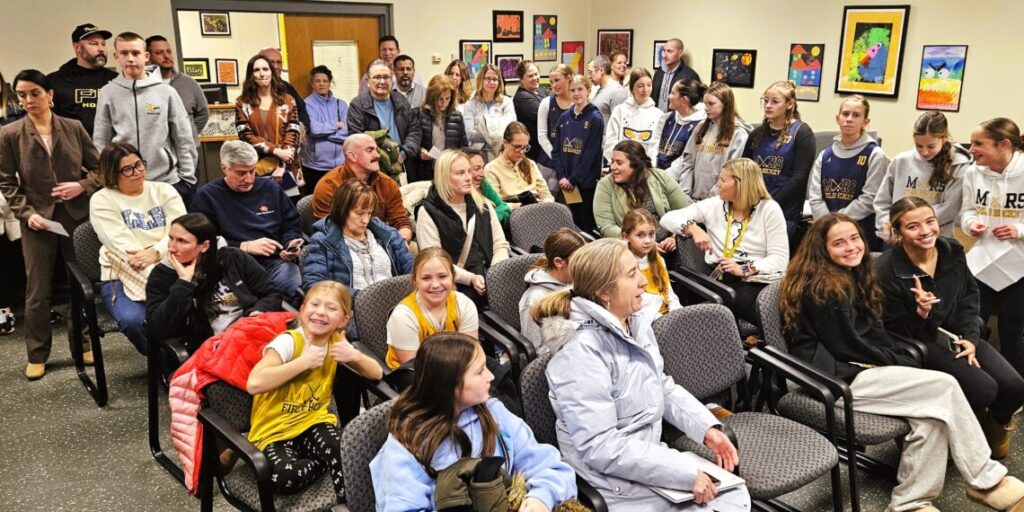
Billinger brought players and families before the School Board on Jan. 13 to explain the program’s goals and the difficulties of growing it without regular turf access. No decision on field hockey sponsorship was requested or made that night. Board members thanked the girls, and member Jennifer DiCuccio called for a broader review of sports participation and facilities.
For field hockey, the two-year practice is an opportunity to show that the interest, participation and community support can last. It isn’t a countdown to automatic approval.
Building a Case One Player at a Time
When I asked Billinger about the lack of access to a properly marked field, she said the club has lower priority for field time.
A school board considering the future of a sport has questions that extend beyond a single season.

Mars field hockey is attempting to answer those questions in real time.
They have a youth program. They have a middle school program. And now they have a high school program.
Billinger has a dedicated staff: assistant coaches Tanya Rings and Emily Bowser, goalie coach Abby Baratka and middle school assistant Gemma Carlino.
The program’s youth coaches are Dina McCaskey, Stephanie Holt, Heather Kolbas, Liz Porco and Jessica Kowatch.
Perhaps the most telling sign of progress Billinger shared with me was that the middle school team won its first game.
For an established program, one middle school victory might barely register beyond the final score.
For Mars, it meant something different. I saw the joy on the girls’ faces.
It was evidence that players who had barely touched a field hockey stick could learn the game, and that a feeder system could begin to produce competitive athletes.

There is plenty of work ahead.
Billinger knows the program needs more players, continued youth growth and greater awareness throughout the district.
Someone had to believe Mars could build this from the ground up. That someone stood next to me on a softball field, watching her girls practice their skills without proper lines.
The field hockey girls who walk proudly through the hallways wearing their uniforms aren’t just learning a new sport. They are laying the foundation for the girls coming behind them, including the elementary and middle school players who may someday wear that same Mars jersey. The name on the front of that jersey means something.
Programs like this grow when people show up. Coaches give their time. Parents volunteer. Students come to games. Younger girls see older girls playing and want to try.
Years from now, if field hockey becomes another proud Mars athletic tradition, people may forget the scores from these early seasons. But they should remember the girls who were willing to be the first.