

NEW BEAVER BOROUGH — Ask state Rep. Aaron Bernstine’s wife, Ilia, what first attracted her to him, and she has a quick answer.
“The dimples.”
Their 7-year-old daughter, Zendaya, has an equally straightforward answer when asked what she most enjoys doing with her father.
“Eat ice cream.”


The family lives in a double-wide manufactured home on a hill overlooking their 106-acre property. A busy railroad runs along one side, with Interstate 76 on the other. The farm is home to about 50 cattle, along with horses and sheep.
During a visit, Bernstine pointed to the everyday responsibilities surrounding him.
“I have three kids, my wife’s here and, you know, we’re going to go out and do farm work tonight,” he said.
People often view elected officials as “caricatures,” he said, overlooking the ordinary lives behind their public roles.
Ilia described her husband as “a down-to-earth guy that is interested in making things better.”
For Bernstine, the conversation about another term moves between those responsibilities at home and the issues he hears about from constituents: property taxes, household expenses, jobs and access to services.
Building a farm and a family
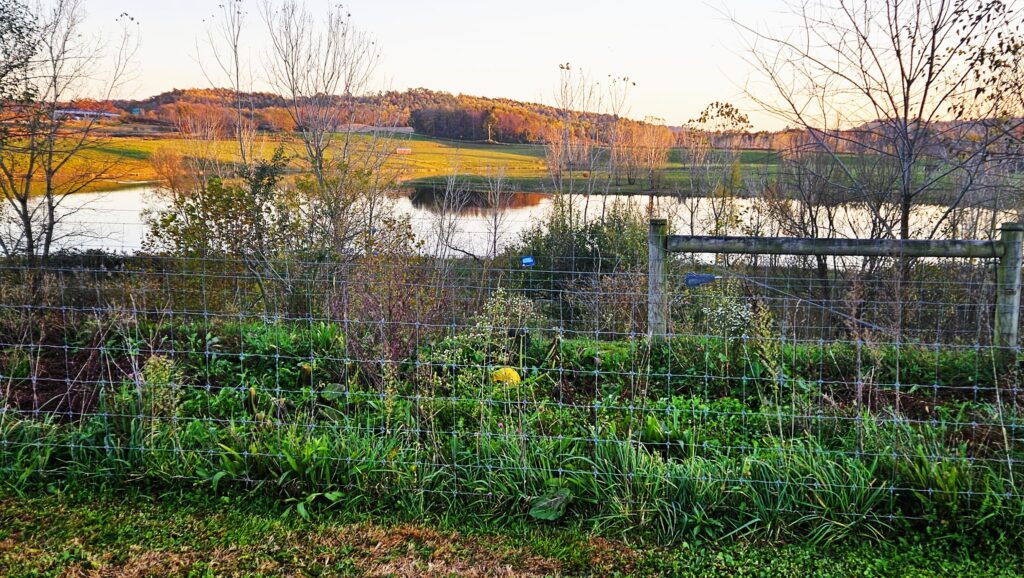

Despite operating a farm today, Bernstine said neither he nor his wife grew up on one.

His career brought him into contact with employers ranging from small businesses to multinational companies. He also previously lived in Adams Ridge before moving to New Beaver Borough, where the family has a New Galilee mailing address.
Bernstine said he and his wife bought overgrown land and worked to turn it into an operating farm.
“We didn’t purchase a farm,” he said. “We purchased land.”
They chose to put their money into developing the property, he said, while making their home in the double-wide.
The couple has three children, ages 11, 9 and 7. Bernstine said his parents also moved onto the property.
“It’s a great place to raise a family,” he said.
A decision to run
Bernstine said his interest in public office began with a visit to a New Beaver Borough council meeting.

“You run for something because you think you can actually make a positive impact,” he said.
His attention eventually turned to the state House. He described gathering petition signatures, knocking on doors and ultimately leaving his private-sector job to commit to his first campaign.
With a young child at home, the decision required his family to cut expenses while he pursued an uncertain outcome.
Bernstine won election in 2016. He describes his approach to politics as an extension of who he is outside government.
“I don’t hide who I am,” he said.
Property taxes top his priorities
Asked about the most pressing concerns he hears from constituents, Bernstine identified property taxes.
He favors requiring voters to approve school property-tax increases, arguing that school officials should make their case directly to the people who would pay them.

He also supports school choice, connecting that position to differences he sees among his own children.
“None of my three kids learn the same,” he said. “None of them have the same interests.”
Bernstine argues that education funding should follow students into settings suited to their needs.
“The money belongs to that student to educate that child,” he said.
Asked how Pennsylvania should fund education while reducing the burden on homeowners, he emphasized school choice and voter approval of tax increases. He did not outline a detailed replacement for local school property-tax revenue during the interview.
On broader household expenses, Bernstine said he supports reducing gasoline and income taxes and narrowing the range of goods subject to taxation.

He identified reducing fraud in public assistance programs as a way to help offset tax reductions. During the interview, he did not provide a detailed calculation showing the cost of his proposals or the savings that verified fraud recoveries would generate.
Bernstine said his approach to spending begins with treating public money carefully.
“I treat every single dollar of taxpayer money as if it’s my own,” he said.
Businesses and the workforce

His private-sector experience and work operating businesses, he said, help him understand the pressures employers face.
“I understand the issues that small businesses are facing every day,” he said.
He also emphasized connections between schools and local manufacturing and technology companies. He said his office has helped employers connect with school districts to introduce students to local career opportunities.
Career and technical education, he said, is another part of preparing residents for the workforce.
“Not everybody needs to go to college,” he said.
On infrastructure, Bernstine identified water, sewer service and internet access as essential to attracting employers and supporting growth.
He said his office has helped secure funding for water and sewer expansion and repairs, crediting relationships with state and federal officials from both parties.
At the same time, he expressed concern about costs imposed on homeowners when they are required to replace what he described as functioning well or septic systems.
Connecting older residents with help

That work extends beyond the legislative office, he said, with staff meeting residents in multiple communities.
He described the office as the center of a wheel, helping people find the appropriate organization and remaining involved as they work through the process.
Among those services, he cited LIFE programs, which help eligible older adults receive coordinated care and remain in their homes.
“Taking care of the most vulnerable is also something that’s critical,” he said.
Bernstine also pointed to what he described as a legislative accomplishment intended to help people receive care at home while their applications are being processed.
He called the approach “deemed approved” and said he helped advance it through the amendment process. The goal, he said, was to address delays that could otherwise leave people entering institutional care while waiting for home-care approval.
He argued that helping people remain at home can benefit both residents and taxpayers.
Bernstine also discussed plans for an Innovative Readiness Training program in Ellwood City. He said his office has been working with the Department of Defense on an initiative that would bring military medical personnel to the area to provide services free of charge.
He presented the proposed program as another example of using government relationships to connect residents with help.
Working across party lines

He cited his work with Democratic Rep. Ryan Bizzarro on legislation connecting hunting and fishing license applicants with the opportunity to register as organ donors.
For someone waiting for a transplant, he said, the political affiliation of the people helping make it possible is beside the point.
Asked where his priorities have differed from those of his party’s leadership, Bernstine pointed to consumer protection.
He said people harmed by defective products should have the ability to protect their rights, describing safety and security as issues he takes seriously.
Asked what concrete, measurable result constituents should expect from another term, Bernstine emphasized continued work to protect taxpayer dollars rather than identifying a specific legislative deadline or numerical goal.
He described the job as one with thousands of people to answer to.
“I have 65,000 bosses,” he said.
Every one of them, he said, deserves equal consideration.
Then he offered one exception.
His wife, he joked, probably ranks first.