

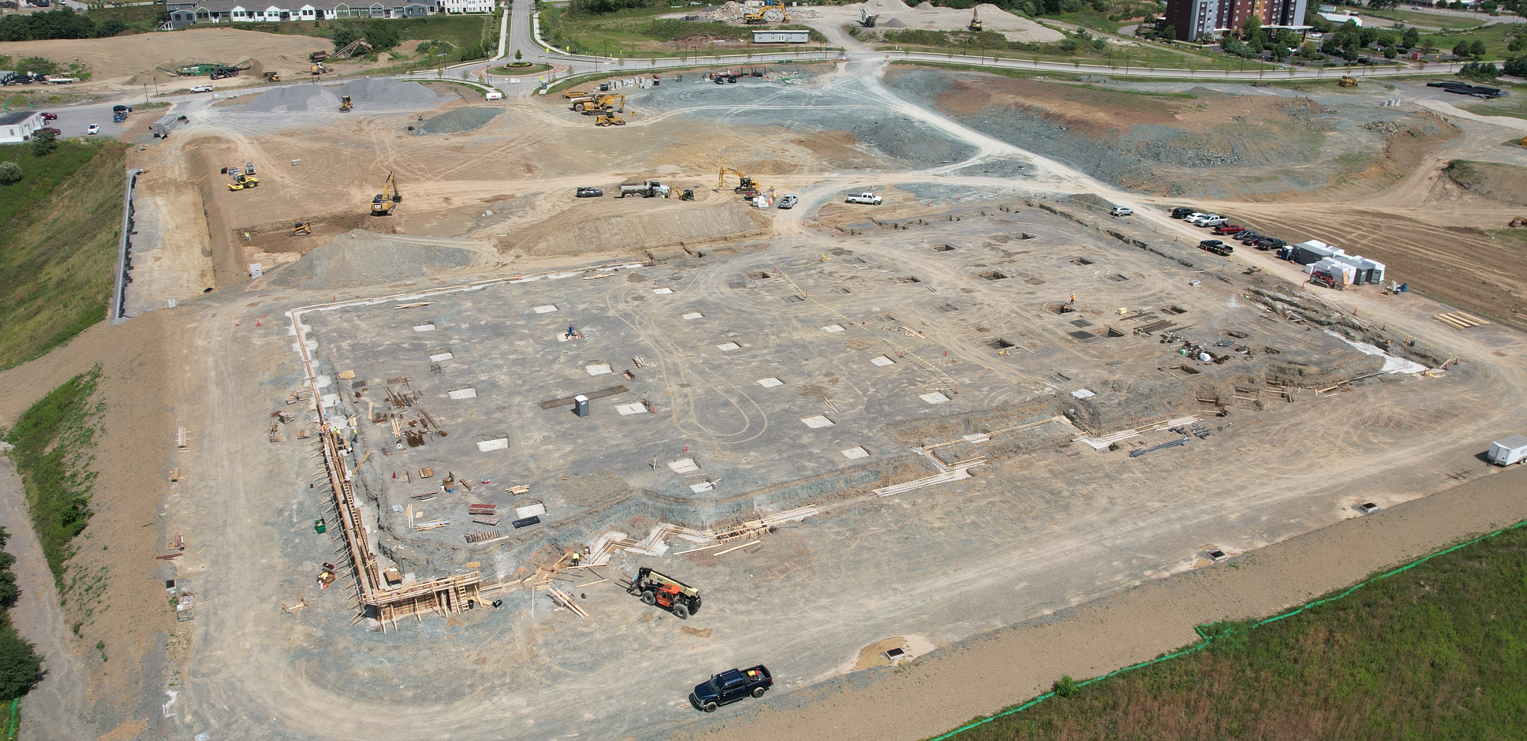
CRANBERRY TOWNSHIP — Every day, just over the hill from Route 228, thousands of motorists traveling Interstate 79 pass the future home of Wegmans, where excavators, cranes and concrete trucks continue transforming what still appears to be little more than an enormous patch of dirt.
But beneath the surface, nearly a year of planning, engineering and earthmoving has already taken place. This fall, the project will reach one of its most visible milestones as structural steel begins rising above the site, offering the first glimpse of what will become Wegmans’ first store in the Greater Pittsburgh region.

What looks like another construction site is actually the story of hundreds of people working together to build far more than a grocery store. Behind the scenes, local contractors, township officials, engineers, inspectors and skilled tradespeople are working together to bring Wegmans’ first Greater Pittsburgh store to life.
It all starts with finding the right piece of land. Then comes grading permits, an engineered building pad, nearly 500 specialized foundation supports and a carefully coordinated effort involving more than 35 subcontractors, approximately 850 construction workers, township inspectors and, eventually, hundreds of future Wegmans employees.
For Sean McDonagh, Wegmans’ Director of Construction and Store Maintenance, the project isn’t simply about constructing a 115,000-square-foot grocery store. It’s about building relationships that will last long after the ribbon is cut.
“It’s really a sequence of milestones,” explained McDonagh. “Every phase has to happen before the next one can begin.”
The Cranberry Township location, expected to open in fall 2027, will be Wegmans’ first store in the Greater Pittsburgh region. When it opens, it will employ approximately 450 full- and part-time employees, many of whom will begin training months before opening at existing Wegmans stores.
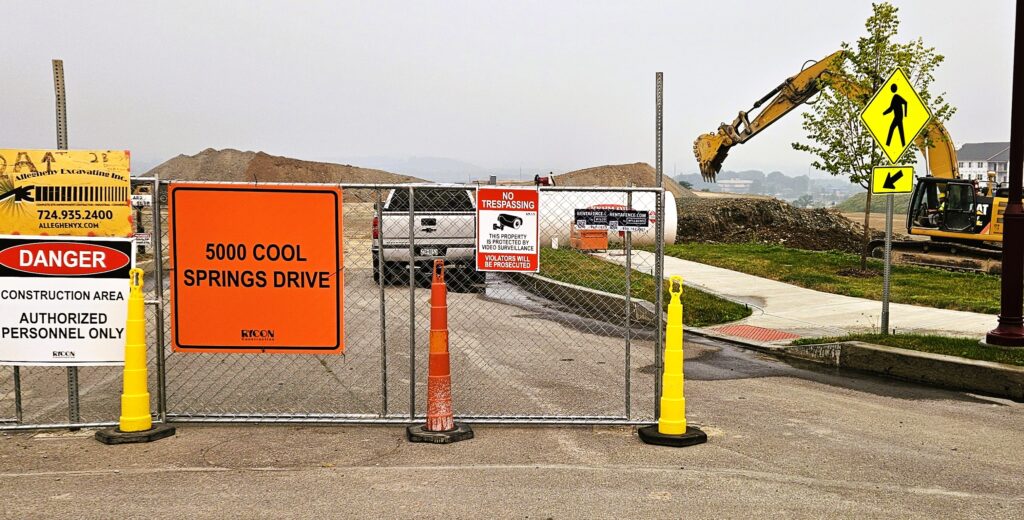
Heavy equipment works beyond the construction entrance at 5000 Cool Springs Drive, the future home of Wegmans’ first Greater Pittsburgh store.
Long Before Construction Begins
Although many motorists only recently noticed heavy equipment arriving along Cool Springs Drive, the project had already been underway for months.
The process began with purchasing the property, assembling engineering and architectural plans and working through Cranberry Township’s review process.
According to Ron Henshaw, Cranberry Township’s Director of Planning and Development Services, Wegmans’ architects submitted detailed architectural and engineering plans that were reviewed by township staff and a third-party building code consultant. Comments were returned, revisions were made and permits were issued only after the plans satisfied township requirements.
But receiving the building permit doesn’t end the township’s role. Henshaw said Wegmans must request inspections as construction progresses, beginning with the building’s footings and continuing through structural steel, utilities, insulation and other stages of construction.
The process continues through a final inspection, when the township determines whether the building was constructed according to the approved plans. Only then can an occupancy permit be issued.
Before the full building permit was approved, Wegmans received an grading permit that allowed crews to begin grading the property.

“We need to have a site work permit to get the process going,” noted McDonagh, “that kicks off the very start of our construction mobilization and the beginning of our sitework, mass earthwork and grading. At this time, we don’t have a full building permit while those plans are being finalized and submitted to the township for review, but we can begin work to complete the building pad in preparation for foundations.”
Henshaw said the township also issued a grading permit and continues inspecting site work, including sewer and water infrastructure, throughout construction.
Months of earthmoving followed as crews reshaped the site and carefully compacted layers of soil to create what builders call the building pad—the engineered base that supports the entire store.
“As soon as the building pad is complete,” McDonagh said, “we can start foundations.”
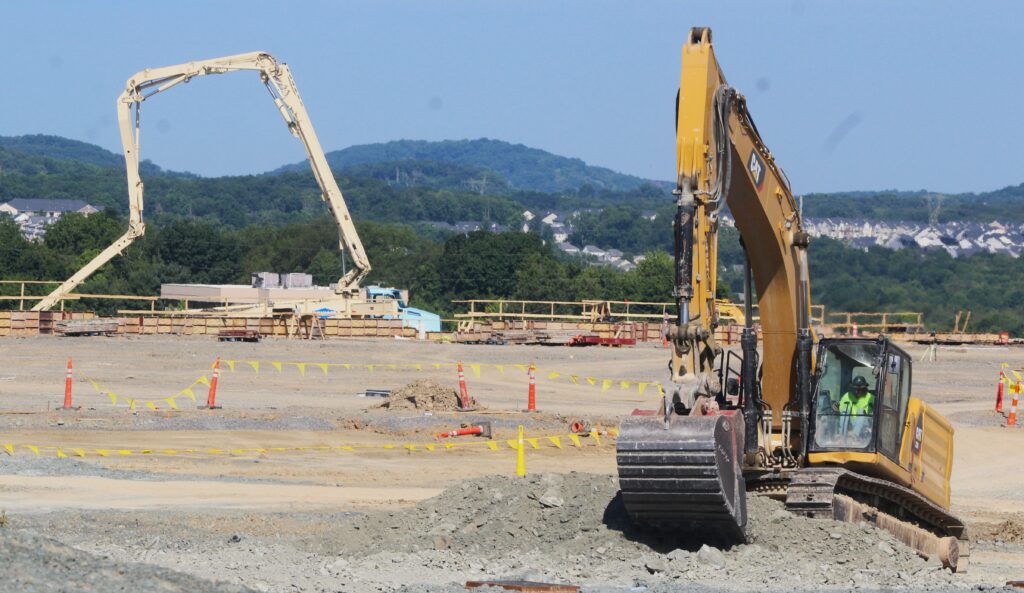
Crews work across the Wegmans site as the project moves from months of earthwork into foundation construction.
Building the Parts No One Will Ever See
Perhaps the most important work on the project is also the least visible.
Because of the site’s soil conditions, engineers installed nearly 500 pressure-injected footings beneath the future store.
McDonagh said previous Wegmans projects have relied on driven piles or drilled caissons, but Cranberry Township’s geology called for a different solution.
The specialized footing system was expected to take three months. Instead, thanks to close coordination between Wegmans, Rycon Construction and specialty subcontractors, it was completed in about a month.
Why People Matter as Much as Concrete
For McDonagh, one of the most important decisions isn’t what goes into the ground.
It’s who builds the store.
“We really pride ourselves on partnering with local contractors,” he said.
Rather than bringing in the same construction company for every project, Wegmans starts with approximately 15 firms before narrowing the field to four or five finalists through a competitive selection process.
Rycon Construction was selected to manage the Cranberry Township project.
McDonagh said local contractors bring something no out-of-town company can replicate. They know the inspectors, understand local building practices, have relationships with area trades and know how projects get done in western Pennsylvania.
“And by the way,” McDonagh added, “these folks that we’re hiring, they’re going to be our customers. They’re going to be shopping in our stores.”
By the time construction is complete, more than 35 subcontractors and approximately 850 construction workers will have contributed to the project.
The Building Begins to Rise
Foundation work will continue through the coming weeks before one of the project’s most visible milestones arrives.
Structural steel is expected to begin rising in early October.

At the same time, crews will install the underground plumbing, electrical and gas infrastructure needed to support Wegmans’ restaurant-quality prepared foods, drainage systems and mechanical equipment.
“We’re really proud of our restaurant foods,” McDonagh said. “There’s a lot of infrastructure to support those kitchens.”
The next major milestone is one that most shoppers will never think about.
Getting the building weather-tight.
Once the roof, walls and windows are in place, temporary heat allows electricians, plumbers and finish trades to continue working throughout the winter.
“It’s one of the biggest milestones,” McDonagh said.
The Hidden Technology
Some of the most important components of a Wegmans will never be seen by shoppers.
Electrical switchgear must be ordered nearly a year in advance because of manufacturing lead times.
“You don’t have a store without the lights on,” McDonagh said.
Then comes the refrigeration system.
A massive CO₂ refrigeration rack will eventually be lifted onto the roof before miles of piping connect refrigerated cases throughout the building.
“When the refrigeration system, the size of a tractor trailer, is craned onto the roof, that’s when the real work begins,” McDonagh said.
More Than a Playbook
Although Wegmans follows a construction playbook refined over decades, McDonagh said every project teaches the company something new.
The company encourages collaboration with its contractor partners to bring new ideas to every job rather than simply executing the playbook.
“That’s how we continuously improve,” he said.
That philosophy extends throughout the project.
Wegmans assigns internal construction project managers who visit the site nearly every week—not simply to inspect progress, but to coach contractors, answer questions and connect the field team with architects and engineers in Rochester.
“They’re the ultimate communicators,” McDonagh said.
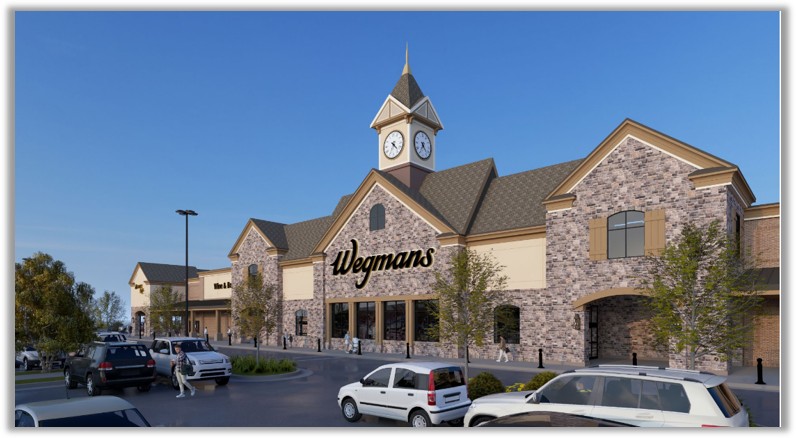
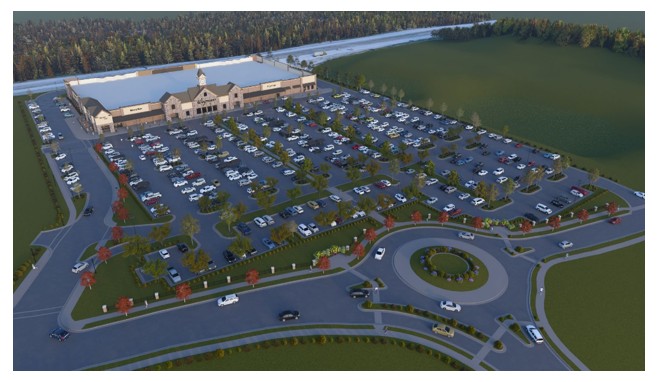
A rendering shows the planned exterior of the Cranberry Township Wegmans, including the stone façade and signature clock tower.
The Finishing Touches
Early next year, crews expect to begin installing terrazzo flooring across much of the store.
Unlike traditional concrete flooring, terrazzo is installed in phases, sanded smooth, protected during construction and finished over several weeks.
McDonagh said the process requires careful coordination between Wegmans and its contractors, adding time to the schedule but resulting in one of the signature finishes found throughout the company’s stores.
McDonagh explained Wegmans continues to invest in terrazzo because the flooring is exceptionally durable, easy to maintain and helps create the clean, high-quality appearance customers appreciate when they walk into one of the company’s stores.
By next spring, cultured stone, brick, windows and the store’s signature clock tower will begin transforming the building into something instantly recognizable as a Wegmans.
When Construction Ends—and the Store Comes to Life
For McDonagh, success isn’t measured when the final inspection is complete.
It’s measured about six weeks before opening.
That’s when construction gives way to operations.
Hundreds of newly hired employees begin stocking shelves, testing equipment, preparing recipes and learning every detail of the store before welcoming the first customers.
Marcie Rivera, Wegmans’ senior public relations coordinator, said hiring is expected to begin in early 2027.
Most employees will first train at existing Wegmans stores so they learn the company’s culture before arriving in Cranberry Township.
“We’re known for being one of the best companies to work for,” Rivera said. “We’re really proud of that. We take care of our employees.”
Rivera further explained that Wegmans has appeared on Fortune magazine’s “100 Best Companies to Work For” list for 29 consecutive years. She credits the recognition to the company’s longstanding philosophy of putting employees first through competitive pay and benefits, premium Sunday and holiday pay, flexible scheduling, tuition assistance for full- and part-time employees, and opportunities for advancement through internal promotion and leadership development.
According to Rivera, recruiting and training will begin months before opening. New employees will spend time learning Wegmans’ culture and their specific roles before the Cranberry Township store welcomes its first customers. The company looks for people who are friendly, share its values and have a passion for food.
For McDonagh, that’s the moment months of planning, engineering and construction become something much more meaningful. Five hundred truckloads of concrete have cured. More than 240 tons of structural steel have been erected. Inspections have been completed.
“The morning of the store opening, when the shelves are fully stocked, restaurant foods is filled, produce is perfectly arranged, and our employees are ready to greet the line of customers as they prepare for their first experience in our new store, that’s when it really feels like Wegmans,” said McDonagh.
After nearly two years of planning and construction, he said, that’s the moment the project finally comes to life.
But only when employees arrive and the store begins serving its community does the project truly become a Wegmans.