

At first glance, the Grand Avenue Grille looks like the kind of place that has always been there — a counter lined with regulars, coffee cups never quite empty, eggs sizzling on the grill, and familiar faces greeting one another by name.
But behind the steady rhythm of this small-town diner is a deeply personal story of family, faith, perseverance, and their determination to build a meaningful future for their son.
For Robert Goupil, who also serves as the diner’s go-to maintenance man, Tracey Goupil, the heart of the kitchen, and their son Clayton, and daughter, Dana Carlson, the diner isn’t just a business. It’s home. It’s purpose. And in many ways, it’s the result of saying “yes” when life handed them uncertainty.
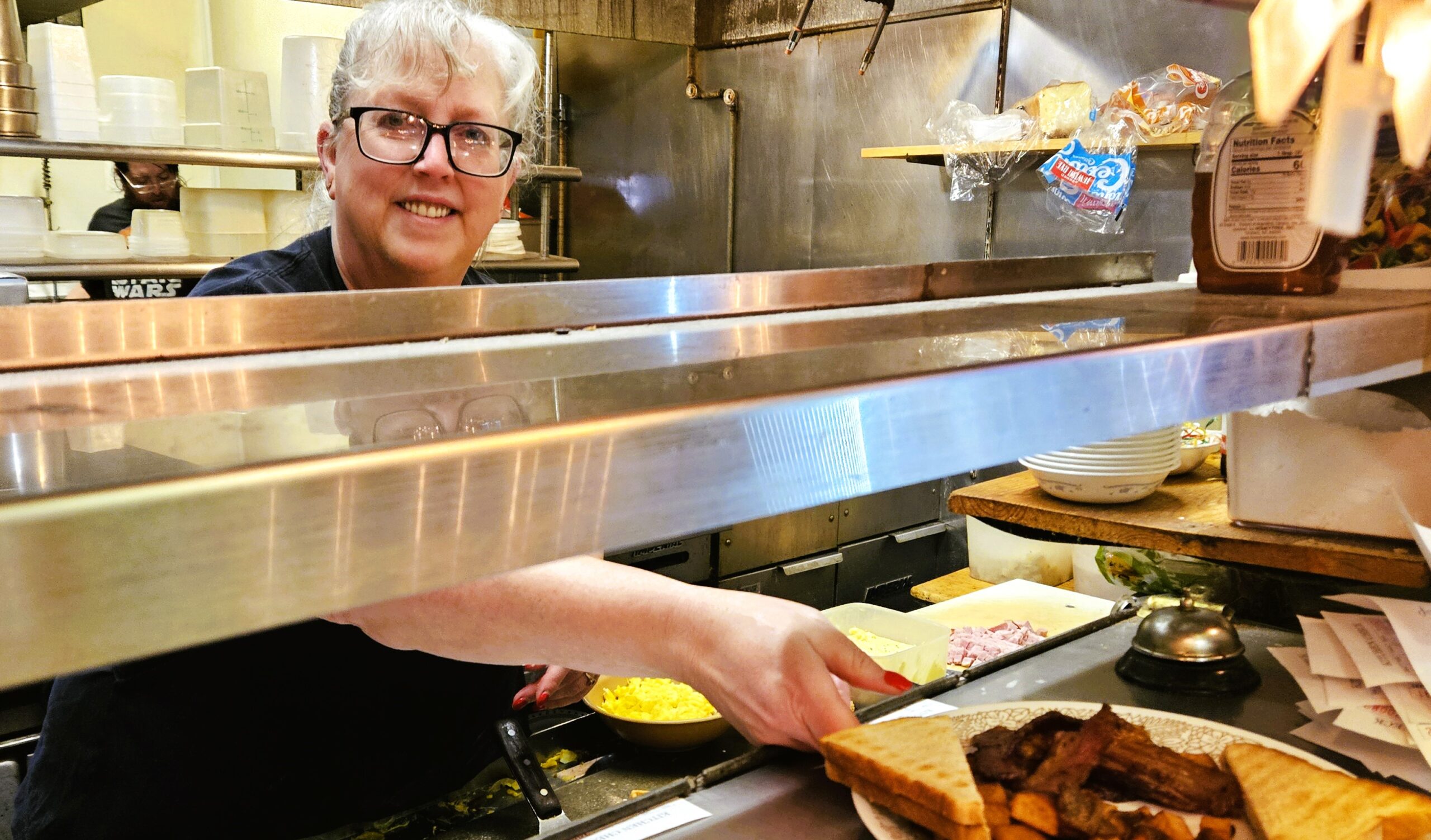
How It All Began — With Clayton
The story of the Grand Avenue Grille doesn’t start with a dream of owning a restaurant. It starts with Clayton Goupil, a young man on the autism spectrum who showed an early interest in cooking.
While still in school, Clayton participated in a vocational life-skills program connected to Slippery Rock University, designed to place students with special needs into real work environments. Because Clayton was already studying culinary arts, the program reached out to the diner’s previous owner — and Clayton began working weekends in the kitchen.
“He liked it,” Tracey recalled. “And she liked his work.”
Clayton didn’t just wash dishes. He learned. He watched. He cooked. And, most importantly, he connected.
“I like serving people,” Clayton said. “I enjoy watching people’s faces glow happy when I make their food.”
That joy became the foundation of everything that followed.
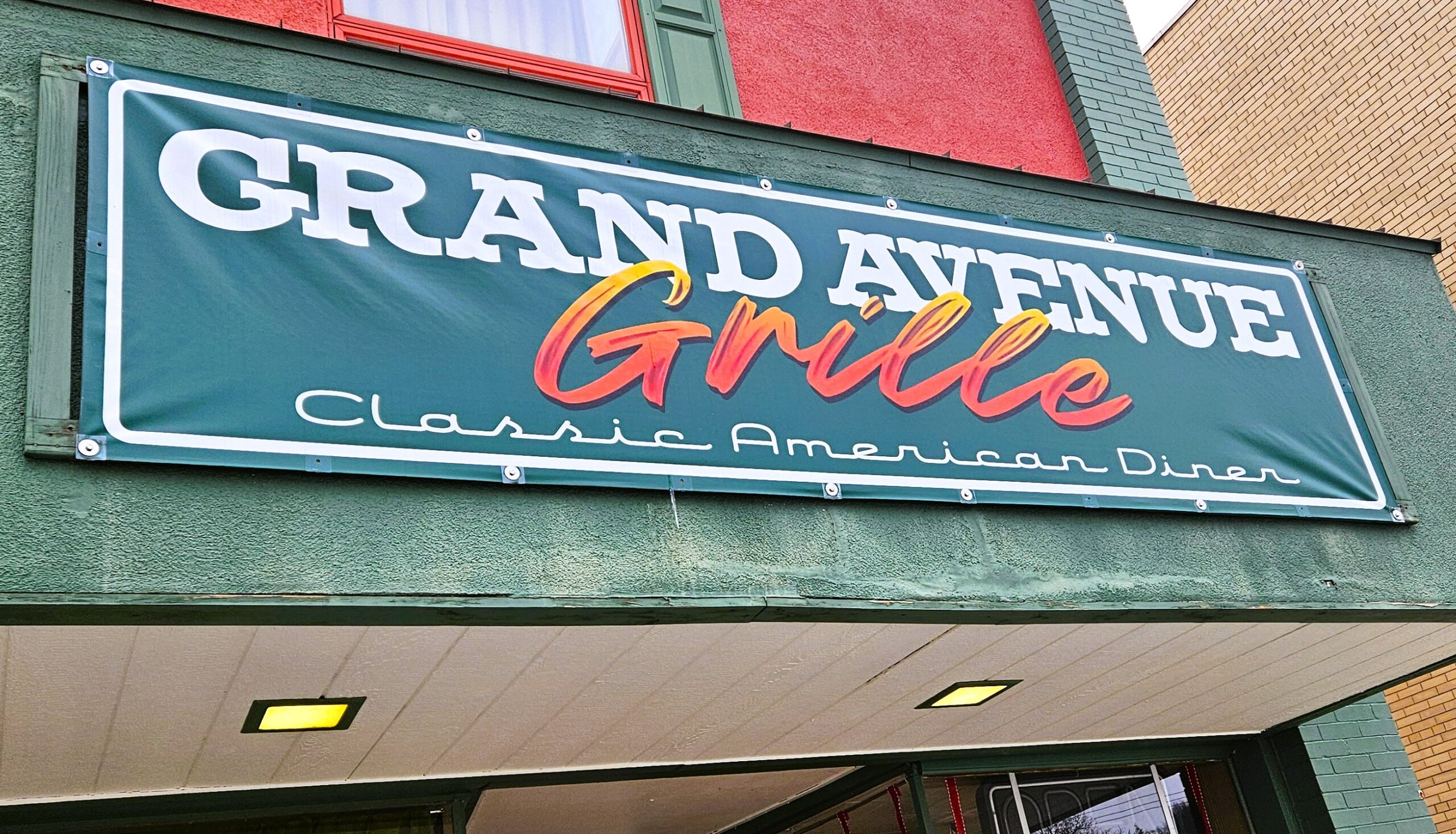
Taking Over — Right Before the World Shut Down
When the previous owner began struggling with health issues, Tracey, Clayton, Dana and Amanda Lytle, found themselves doing more and more of the day-to-day work. Eventually, a conversation turned into an opportunity — and in early 2020, the Goupils officially took over the diner.
Three weeks later, COVID-19 shut everything down.
“We were open about three weeks before COVID hit,” Robert said. “Then we were closed most of the summer.”
The timing was brutal. But instead of walking away, the family leaned in.
They used the downtime to paint, clean, and revamp the space. They relied on a supportive landlord. And when they were allowed to reopen — first briefly, then takeout-only — they kept going, even when business was slow and people were afraid to leave their homes.
“It was a slow start,” Tracey admitted. “But gradually, it grew. Mostly from regulars.”
For years, it was just the three of them running the diner six days a week.
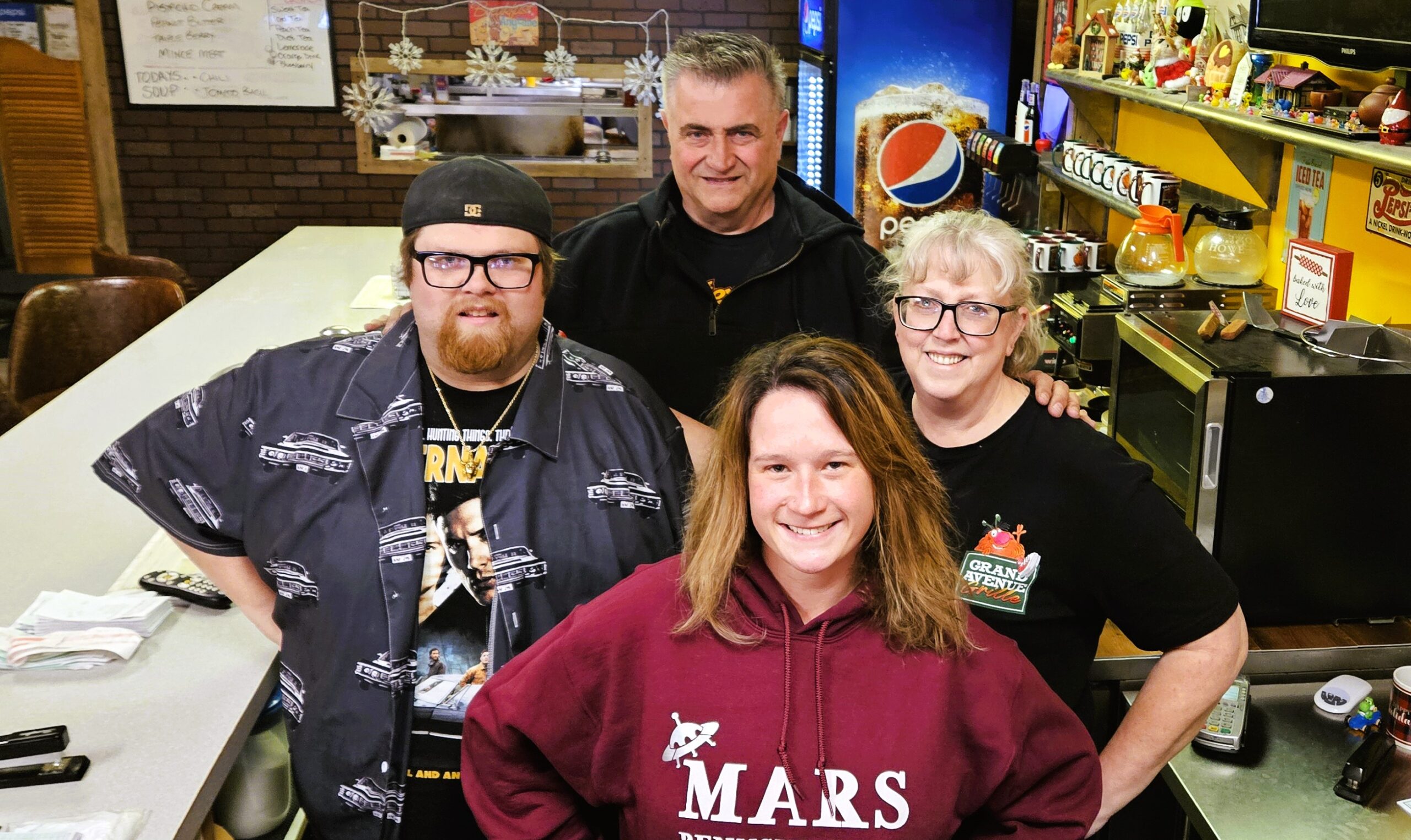
A True Family Operation
Today, the diner still operates on a remarkably small team. During the week, it’s often just Tracey cooking, Clayton cooking and washing dishes, and Amanda Lytle — a waitress who has been with the Goupils since day one — managing the dining room with Dana helping out on the weekends when she is available.
Amanda isn’t family by blood, but in every other way, she is,” said Tracey. “She’s like our adopted daughter.”
Amanda knows customers’ orders by heart. She remembers birthdays, family updates, and who takes cream or sugar in their coffee. Regulars don’t just come for breakfast — they come because they’re known. “You’ve got a village behind you here,” Amanda said.
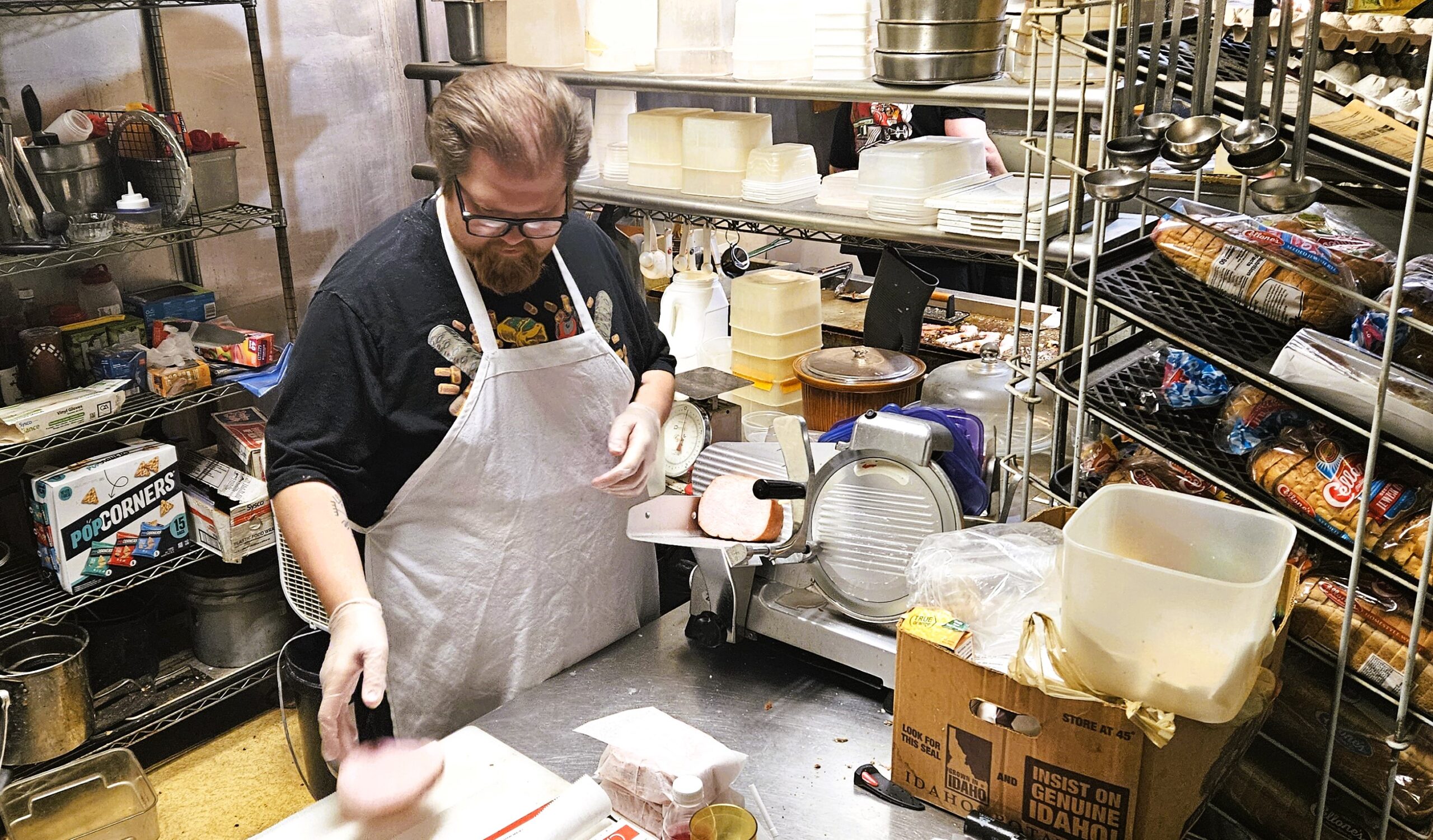
Clayton’s Role — and His Growth
Clayton is not a symbol or a feel-good story — he is a critical part of the operation.
Each morning, he sets up the sinks, preps potatoes (sometimes 50-pound boxes), helps on the line, handles dishes, fetches ice, lifts heavy items, and steps in wherever he’s needed. On busy days, especially weekends, his role doubles.
“He’s our right-hand man,” Robert said.
Beyond the diner, Clayton is also a Special Olympics athlete, competing in basketball, softball, soccer, bowling, and hockey — his favorite. His parents credit both sports and the restaurant for helping him build confidence, responsibility, and social skills.
“This is my second home,” Clayton said simply.
Long before the diner became a full-time family operation, Robert also made a point of sharing experiences with Clayton outside of work — including years spent together in Boy Scouts.
“I did Boy Scouts with him forever,” Robert said with a laugh. “I am absolutely the last person you’d expect to want to go camping in a tent.”
While Clayton slept in the tent with the troop, Robert admitted he often camped out in his Suburban with an air mattress and a laptop — but he was always there.
“I was there,” he said. “That was the important part.”
Those experiences, Robert believes, helped Clayton build confidence, routine, and resilience — the same traits that now serve him every day in the diner.
The Weight — and the Reward — of Ownership
Running a small diner is relentless.
“Everything falls on your shoulders,” Tracey said — from bills and staffing to ordering food and equipment breaking at the worst possible times. Robert often works his full-time job, then comes in after hours to fix hot water tanks, appliances, or anything else that can’t wait.
“You can’t just put a sign up that says ‘closed for repairs,’” he said.
Yet despite the exhaustion, the family says the rewards outweigh the struggle.
The word-of-mouth growth.
The regulars who bring friends.
The comments that start with, “‘I just wanted to tell you how much I appreciate you.’”
And perhaps most meaningful of all — watching Clayton thrive in a place built around his strengths.
“The whole basis of this place is because of Clay,” Tracey said. “We didn’t have a grand plan — we just jumped in and winged it.”
A Mother’s Perspective
For Tracey, the diner also solved a problem many parents of children with special needs quietly face — how to balance work, care, and dignity.
“This way, I didn’t have to get him to a job and then try to get to my job,” she said. “This was a way for us to work together.”
What began as a practical solution became something deeper. The diner gave Clayton structure, responsibility, and pride — and allowed the family to build a life where no one was left behind.
Advice for Other Families
When asked what advice he would give to families raising children with special needs, Robert didn’t hesitate.
“Don’t give up,” he said. “Sometimes it’s hard for them to express what they want. You have to watch, listen, and feel it out. And when they show interest in something — give it 100 percent.”
Not every dream works out the way parents imagine.
Robert admitted that letting go of certain expectations was one of the hardest parts of parenting — especially when it came to driving. A lifelong drag racer, Robert once imagined teaching his son how to drive, a rite of passage he had looked forward to for years.
“But we decided to move on,” he said. “God gave him to us to take care of him. We’ll think of something else. We’ll play a different card game.”
Instead of dwelling on what Clayton couldn’t do, the family focused on what he could do. Robert and Tracey bought Clayton an all-terrain vehicle — a “Gator” — that he proudly drives around their property.
“He absolutely enjoys it,” Robert said. “We just put a plow on it, so now he plows the driveway.”
It was a small decision with big meaning — another way for Clayton to experience independence, responsibility, and pride on his own terms.
More Than a Meal
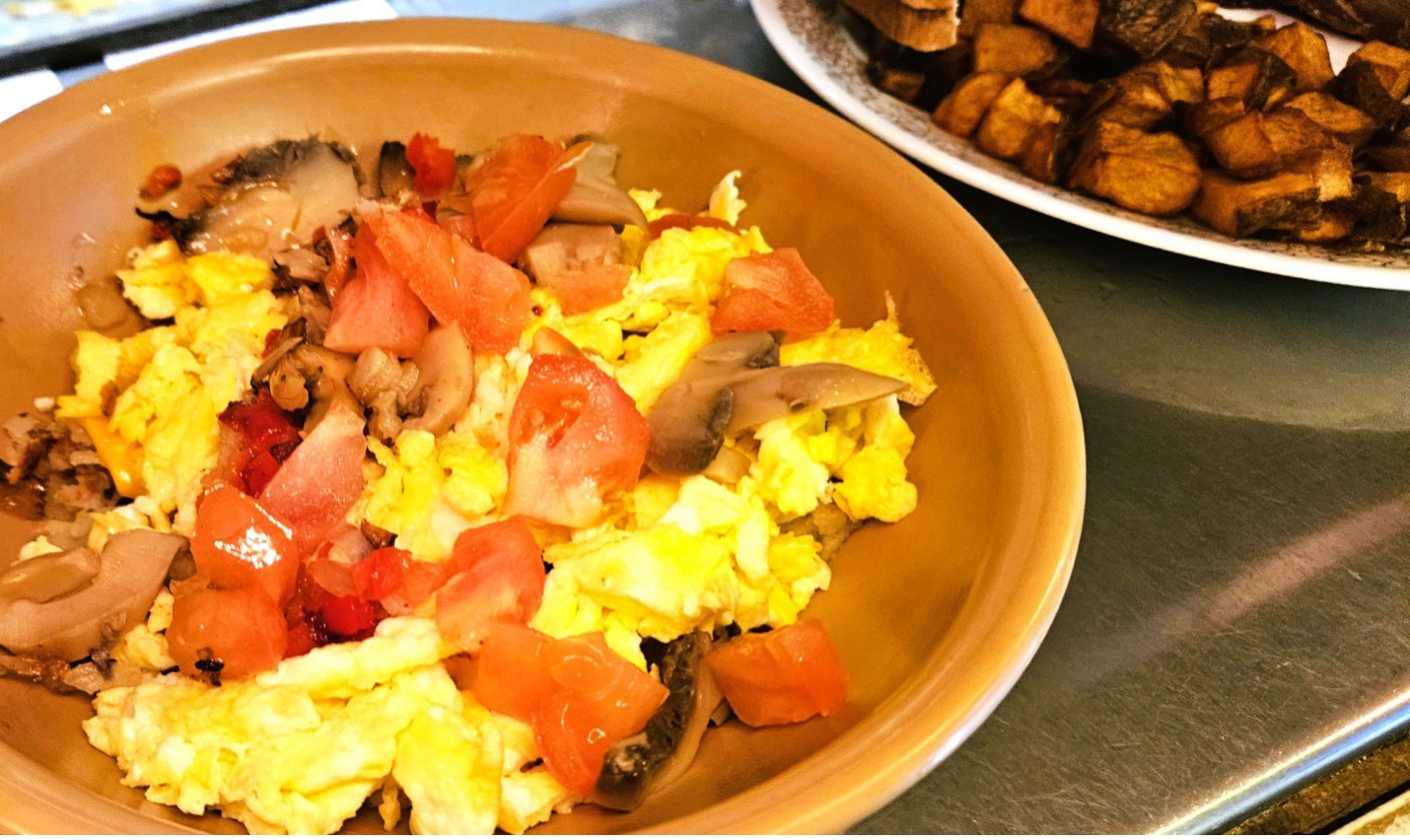
The Grand Avenue Grille isn’t fast food. Everything is made fresh. Burgers aren’t frozen. Eggs are cracked to order. And service comes with conversation, care, and often a hug from Amanda.
That sense of familiarity isn’t lost on longtime customers like Joseph Ow of Mars, who has been coming to the diner for decades — long before the Goupils took over. “I’ve been coming here 30 or 40 years,” Ow said. “Mama’s before that. Susie’s before that.”
He credits the current owners for continuing that tradition. “Since this family’s taken over, the service is good,” he said. “For the price you get — you come back.”
Another special touch comes from Tracey’s mother, Katie Mawhinney, who makes farmhouse-style, homemade pies from scratch for the diner — a tradition that adds yet another layer of family to every meal.
What the Goupils hope customers experience is simple:
“Family,” Tracey said.
“A warm welcome,” Robert added.
In a world that often rushes past people with disabilities — and overlooks the quiet sacrifices of small business owners — the Goupil family has created something rare.
A place where work has meaning.
Where community still gathers.
And where love is served with every plate.
And that may be the most important thing on the menu.
When asked about the future of the diner, Robert didn’t talk about expansion or big plans.
“Just that it keeps going,” he said. “The way it’s going.”
Clayton, on the other hand, has ideas.
With a grin, he joked that someday he might turn part of the space into a candlepin bowling alley — maybe with a snack bar — a dream inspired by his love of bowling and hockey. It’s not a plan so much as a reflection of who he is: curious, imaginative, and always thinking about what comes next.
“Clay keeps us active,” Tracey said. “He’s always thinking of something else he can do.”
And for the Goupil family, that’s more than enough of a future to believe in.