

There were four dogs to choose from that day.
Two labs. Two German shorthaired pointers.
All of them energetic. All of them capable.
But when Steki jumped up on Officer Natalie Richards and locked eyes with her, something felt different.
Moments later, Richards knelt beside her—and the high-energy dog who had been bouncing just seconds before quietly settled in. Calm. Focused. Present.
That was the moment.
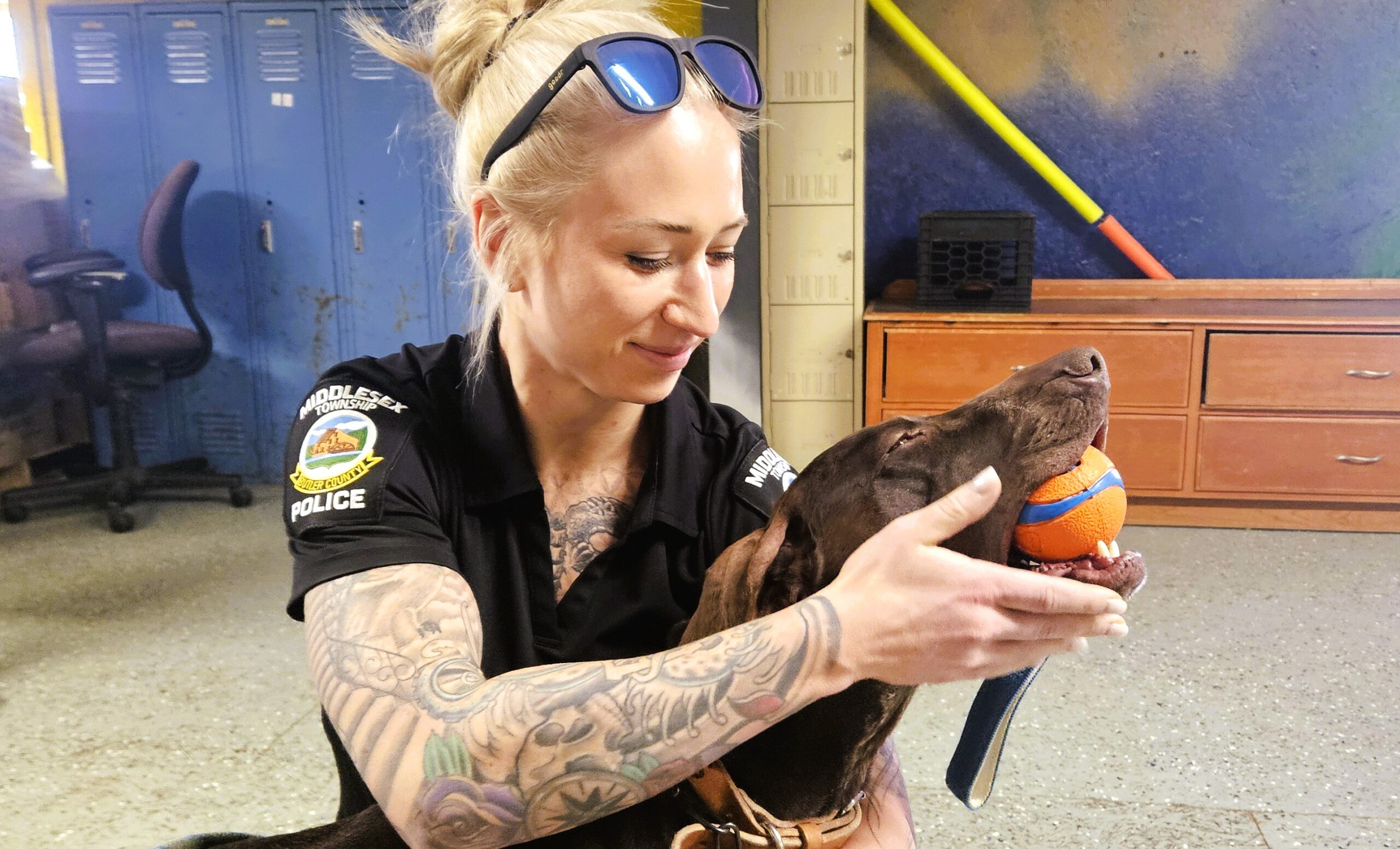
And just like that, Middlesex Township didn’t just find its next police dog.
It found something more.
On Monday, May 4, Middlesex Township Police Chief Justin Bouch and Officer Richards made the trip to Shallow Creek Kennels in Mercer County—a nationally respected training facility—to select the newest member of the department’s K9 program.
But this wasn’t about adding a traditional police dog.
This was about changing the way policing looks in Middlesex Township.
“We are calling it a therapy dog, but it’s really about community interaction and engagement,” Bouch explained. “More friendly, more interaction, more building community trust—I think that’s more important in our township.”
It’s a deliberate shift.
In many departments, K9 units are associated with narcotics detection or patrol work. But in Middlesex Township, the focus is different—connection over enforcement.
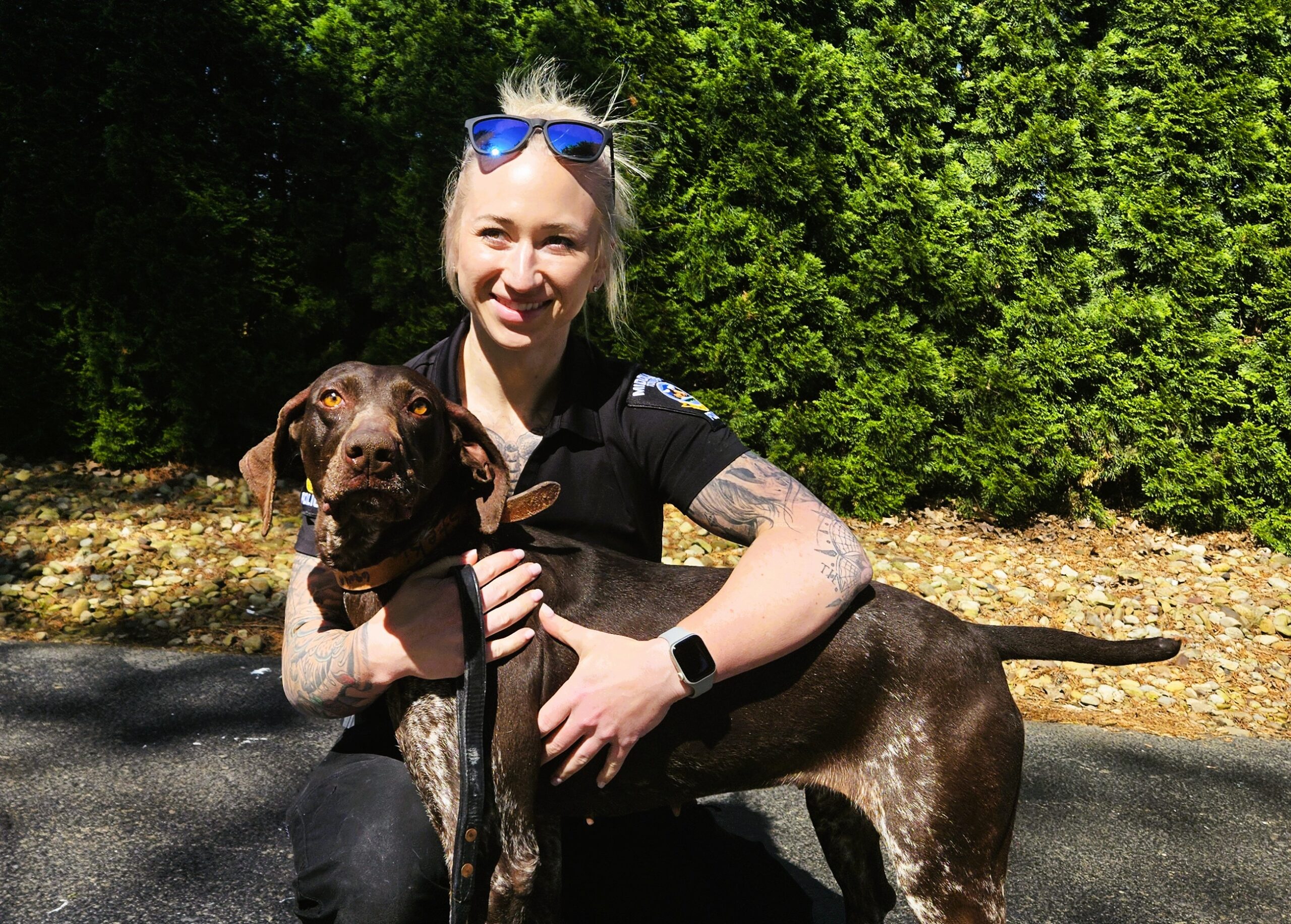
Steki, a one-year-old German shorthaired pointer, will be trained not only in ground tracking—helping locate missing children or elderly residents—but also in providing comfort during difficult moments.
In a township that spans nearly 23 square miles, with wooded areas and growing neighborhoods, that capability matters.


For Officer Richards, the decision was both professional and deeply personal.
Richards, who was hired by the department on Nov. 28, 2025, brings about eight years of law enforcement experience to the role.
“You’re picking a partner,” she said. “This dog is going to spend its life with me. It’s going to change my life.”
Richards originally expected to choose a lab. But something about Steki stood out.
“She was very diligent when she was working,” Richards said. “But then she could go from high energy to calm and soothing. She was very sweet. I took to her right away.”
When they stepped away to compare the final two dogs, Richards said the decision became clear.
“When we were walking and then just sat down together, we were kind of just looking at each other,” she said. “That’s when I knew.”
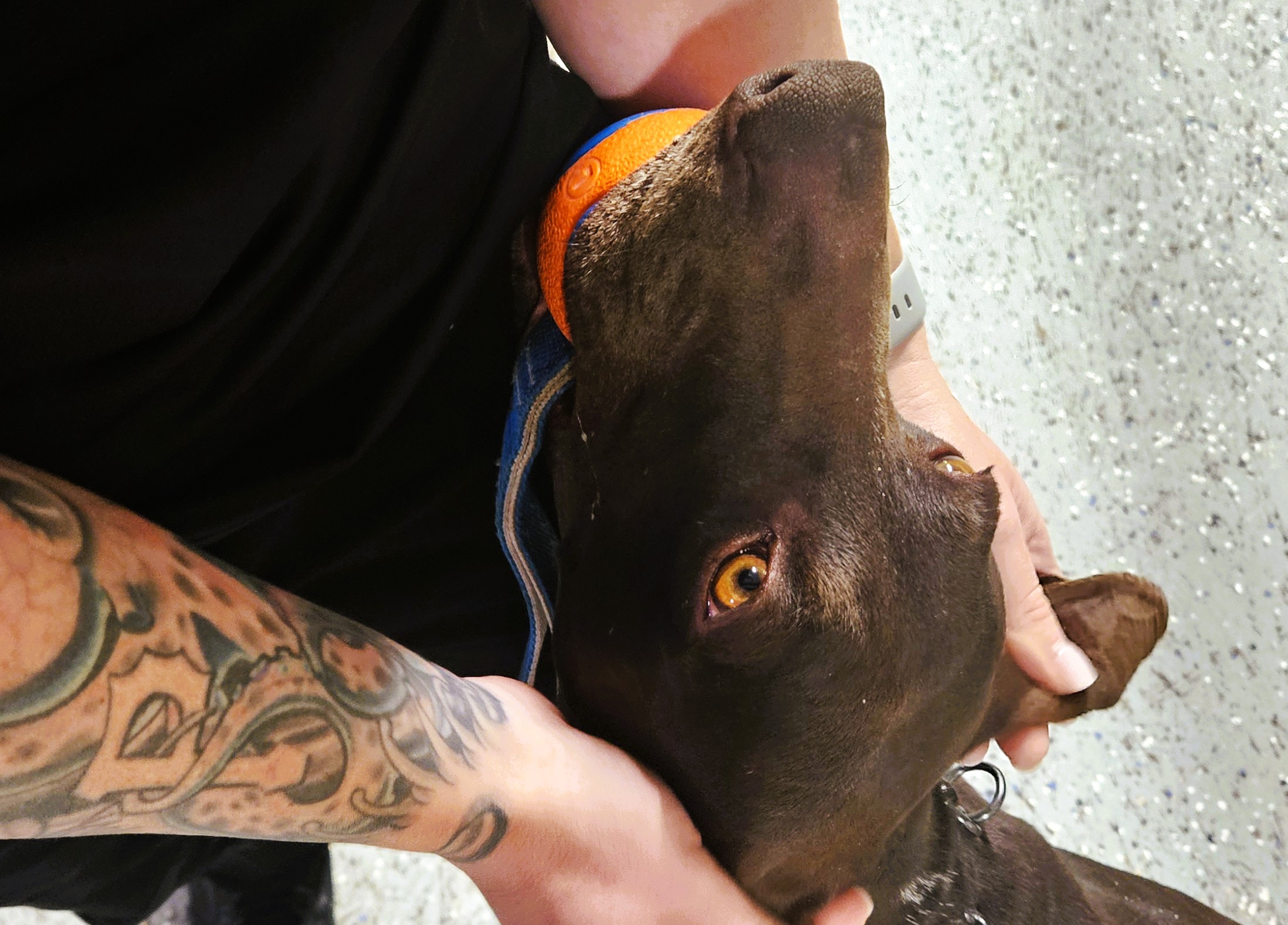
At Shallow Creek Kennels, that kind of moment is exactly what trainers look for.
“We’re basically matchmakers,” said trainer Joe Bailey, who has spent years working with police and military dogs. “The handler has to want to work with that dog. That bond is what drives everything else.”
Unlike many people might assume, these dogs don’t arrive fully trained.
They are selected for their temperament, intelligence, and genetics—often sourced from Europe—then trained alongside their handler.
“The dog might have the ability,” Bailey explained. “But it’s the relationship that makes the team.”
That process will begin this summer, when Richards returns to the kennel for several weeks of intensive training. From there, the two will begin building the kind of partnership that can’t be rushed.
“It takes time,” Bailey said. “You’re not just training the dog—you’re training the person.”

It’s a milestone.
When he first took over the department, Middlesex was short-staffed. Today, the department is fully staffed and operating 24/7—a foundation that made this next step possible.
And importantly, the program isn’t being funded by taxpayers.
The department already had roughly $50,000 in a dedicated K9 fund—raised through community support and donations.
“This is something the community helped build,” Bouch said. “And now it’s something we can give back.”
That support didn’t happen overnight.
At its April 15 meeting, the Middlesex Township Board of Supervisors formally approved the creation of the K9 program, including a memorandum of understanding assigning Officer Natalie Richards as the department’s K9 handler, according to Township Manager Jeff Winkle.
The board also approved $16,600 for the purchase of the dog and training through Shallow Creek Kennels.
Township officials say the program has been years in the making, funded through donations from residents and local businesses.

That sense of connection is exactly the point.
In the coming months, residents will begin to see Steki not during emergencies—but in everyday moments.
Walking through neighborhoods. Visiting schools. Showing up at community events.
Her official introduction is planned for Middlesex Township Community Days in July.
But in many ways, her role has already begun.
Because while Steki may wear a badge, her job isn’t just about policing.
It’s about presence.
It’s about trust.
And in a time when that trust matters more than ever, Middlesex Township is betting that sometimes the best way to serve a community…
…starts with a dog.