

MARS — Long before the first whistle blows at a Mars Area High School football practice, a small team of students is already at work.


And when the players and coaches are finished, their work isn’t necessarily over.
They are the Mars Football Operations Team — affectionately known around the program simply as the “Ops Team.”

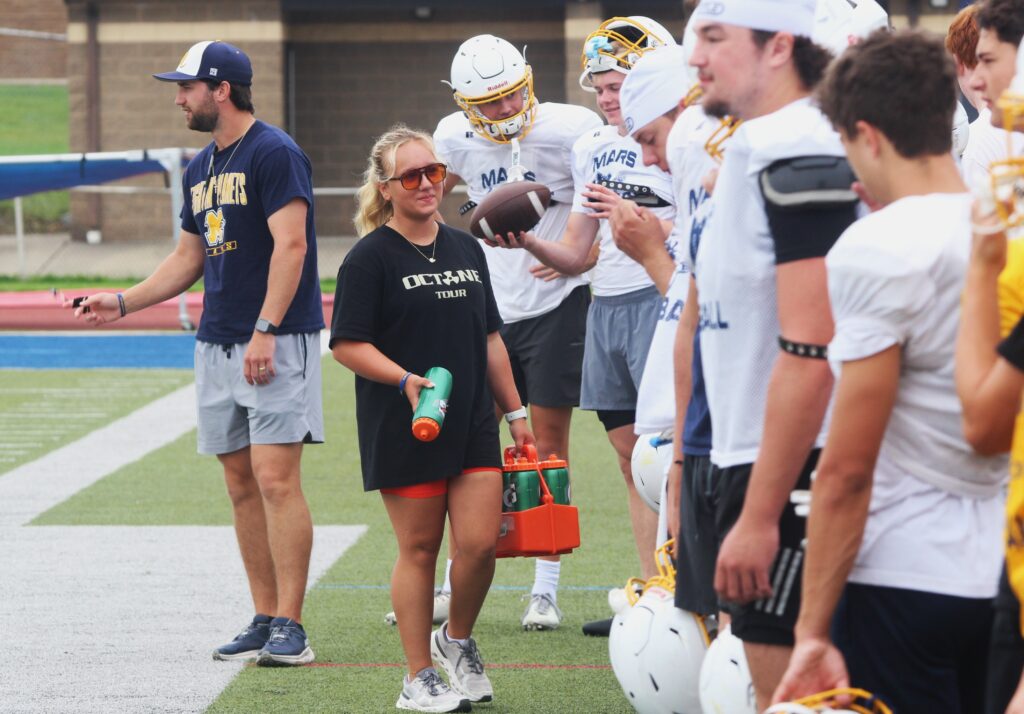
The five-student crew works largely behind the scenes, handling many of the details that allow coaches to concentrate on coaching and players to concentrate on football.
Head coach Zachary Benedek doesn’t consider those details minor.
“The Ops Team is a main artery of this team and program,” Benedek said. “They do an amazing job and go above and beyond to help us enact our staff’s vision for this program.”

“These five help practice run as efficiently as possible, and we wouldn’t be able to do what we do without them,” he said.
“We basically take care of all the little things so the coaches don’t have to worry about them,” explained senior Paige Lauten.
Those little things can add up to a long day.
On a recent morning, Lauten arrived at the field around 7 a.m. She began pulling out equipment and practice clock, brought out the drone and helped prepare coolers, water bottles and Gatorade for practice.
She expected to leave around 5 or 5:30 that afternoon.
That’s an eight- to 10-hour day spent supporting a football team without ever taking a snap.
Benedek calls Lauten the team’s “director of football Ops” and said her work begins well before the players arrive.

Her role has become so important that Benedek jokes about who is actually in charge.
“I tell her all the time that she’s basically my boss,” he said.
Benedek said Lauten’s leadership also gives the younger members of the Ops Team someone to learn from, helping ensure the program continues after she graduates.

Setting the Mood
Sometimes the Ops Team’s contribution can be heard before it is seen.
Music plays across the field during practice, and members of the team take turns deciding what comes through the speakers.
Country music can create a more relaxed atmosphere. Rap and pop can turn up the energy.

Players occasionally make requests. Coaches aren’t afraid to weigh in either.
If the energy needs to change, so does the playlist.
But the Ops Team’s responsibilities go well beyond being practice DJs.
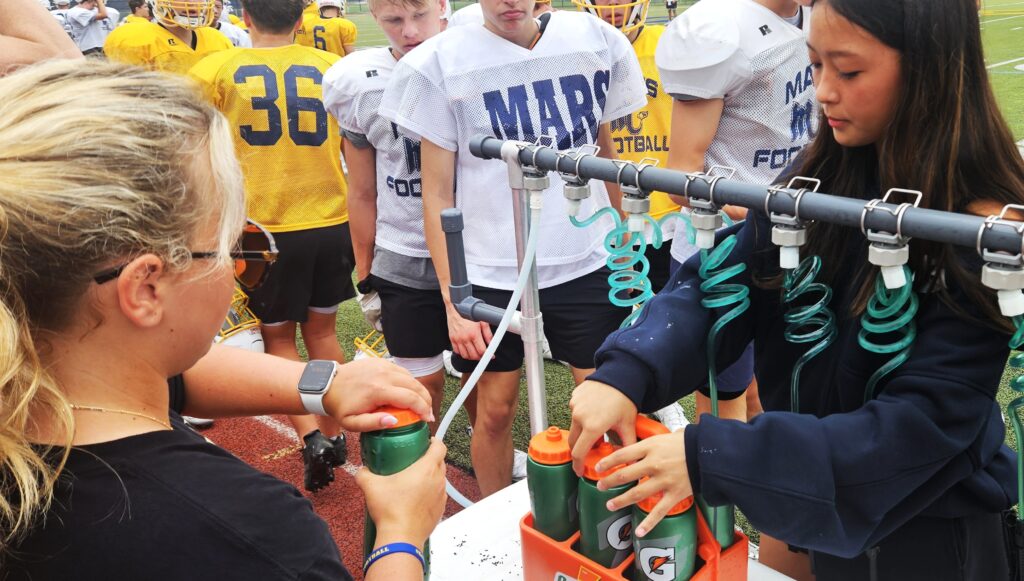
Sophomore Maya Keller moves throughout practice helping wherever she is needed — distributing water, assisting with equipment and making sure coaches have what they need at their stations.
“It means a lot because it gives me the chance to help out the coaches with stuff that they can’t really have time to,” noted Keller. “I just feel like it’s really helpful to the players too because they’re all busy doing all these practices.”
Could the football team practice without them?
“They could work without us, but it’s difficult because of all the waters,” explained Keller. “They probably wouldn’t have time to do everything and have time to practice.”
Benedek agrees that the time the Ops Team saves matters. Bella Schuller and Keller help divide responsibilities that include handling water, setting up and closing up concession areas and making sure the practice clock operates properly.
That allows the coaches and players to keep moving through practice.

A View From Above
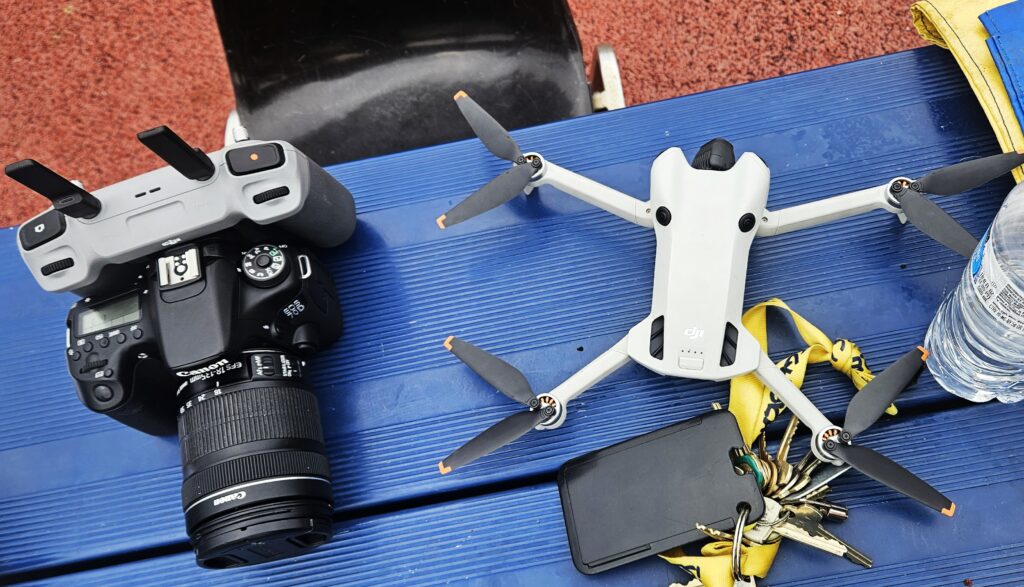
One of the Ops Team’s more technical responsibilities is providing coaches with a view of practice from above.
Sophomores Oliver King and Ethan Krafjack provide drone support for the team, helping capture practice footage that coaches can use to review the action on the field.
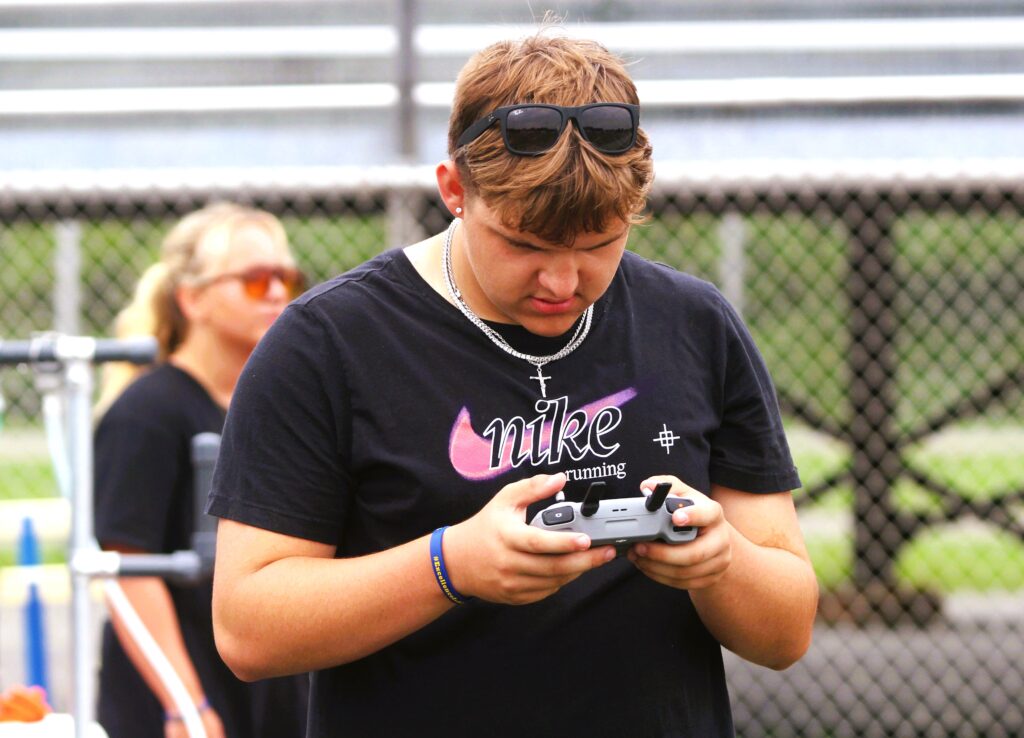

The job includes getting the practice footage recorded and uploaded for the coaching staff to review and prepare for the next practice.
Benedek said King and Krafjack have learned to accommodate his particular preferences for camera angles, direction and how long the drone needs to remain in the air.
“They have been great in helping us review our practices,” noted Benedek.
For King, though, being part of Ops means more than operating a drone.
“It makes me feel like I’m part of the team,” he said.
The players reinforce that feeling.
“They receive me by showing me that I’m a part of the team, treating me like one of their brothers,” King said.
Keller described a similar relationship.
“They all treat us the same as if we were players,” she said. “They respect us and the coaches respect us.”
When Practice Ends, the Work Continues
When a practice session finishes, the Ops Team checks with coaches to determine what equipment will be needed again and what can be returned to storage.
Practice clock come apart. Equipment goes back into the equipment room. Items used from the concession stand are put away.
Then, if another practice is scheduled, much of it comes back out again.
The work follows them on the road, too.
Members of the Ops Team travel with the football team and assist with preparations for away games. That can mean helping trainers and loading the trailer with equipment before the team ever leaves Mars.
On game days, the pace can become especially hectic when players need water.
“If the boys need waters, we need to go there,” Lauten said. “We need to come to the water station and get the waters quick and then get back out there quick enough.”
It’s the kind of work spectators sitting in the stands on Friday nights rarely see.
That’s largely the point.
If the Ops Team is doing its job, the players can play and the coaches can coach.
More Than a Job
For Lauten, now in her second year with the Ops Team, the experience is also providing an early look at a possible career.
After graduating from Mars, she hopes to attend a four-year college and study sports communications.

The experience also gives the students something that can’t necessarily be measured by how many bottles they fill, pieces of equipment they move or hours of practice they film.
It gives them a place within the program.
Lauten said the players have been “super nice” and “super uplifting,” while the coaching staff has made the Ops students feel welcome.
For Keller, that means being respected like one of the players.
For King, it means being treated like one of the guys.
And for the entire Ops Team, it means showing up each day and doing whatever needs to be done, often outside the spotlight.
Benedek believes their contribution can also be measured in something less obvious: time.
Everything the Ops Team sets up is time coaches don’t have to spend moving equipment or preparing stations — time that can instead be spent working with players on the field.
Over the course of summer workouts and heat acclimatization, Benedek said those saved minutes become hours.
And because of that, he believes the five students should feel some ownership in what happens under the Friday night lights.
“They should also feel every touchdown, turnover or big play because they had a hand in making that happen,” Benedek said. “Everything they set up for us was extra time we were able to practice technique that would’ve been lost without them.”
Most people watching Mars football on a Friday night will never see the hours of preparation that happened before the team took the field.
They won’t see the students who filled the bottles, moved the equipment, prepared the coaches’ stations, chose the practice soundtrack or sent a drone into the air to capture film.
They aren’t the ones scoring touchdowns.
They aren’t the ones making tackles.
But they’re part of Mars football all the same.
They’re the team behind the team — the team that takes care of the team.