

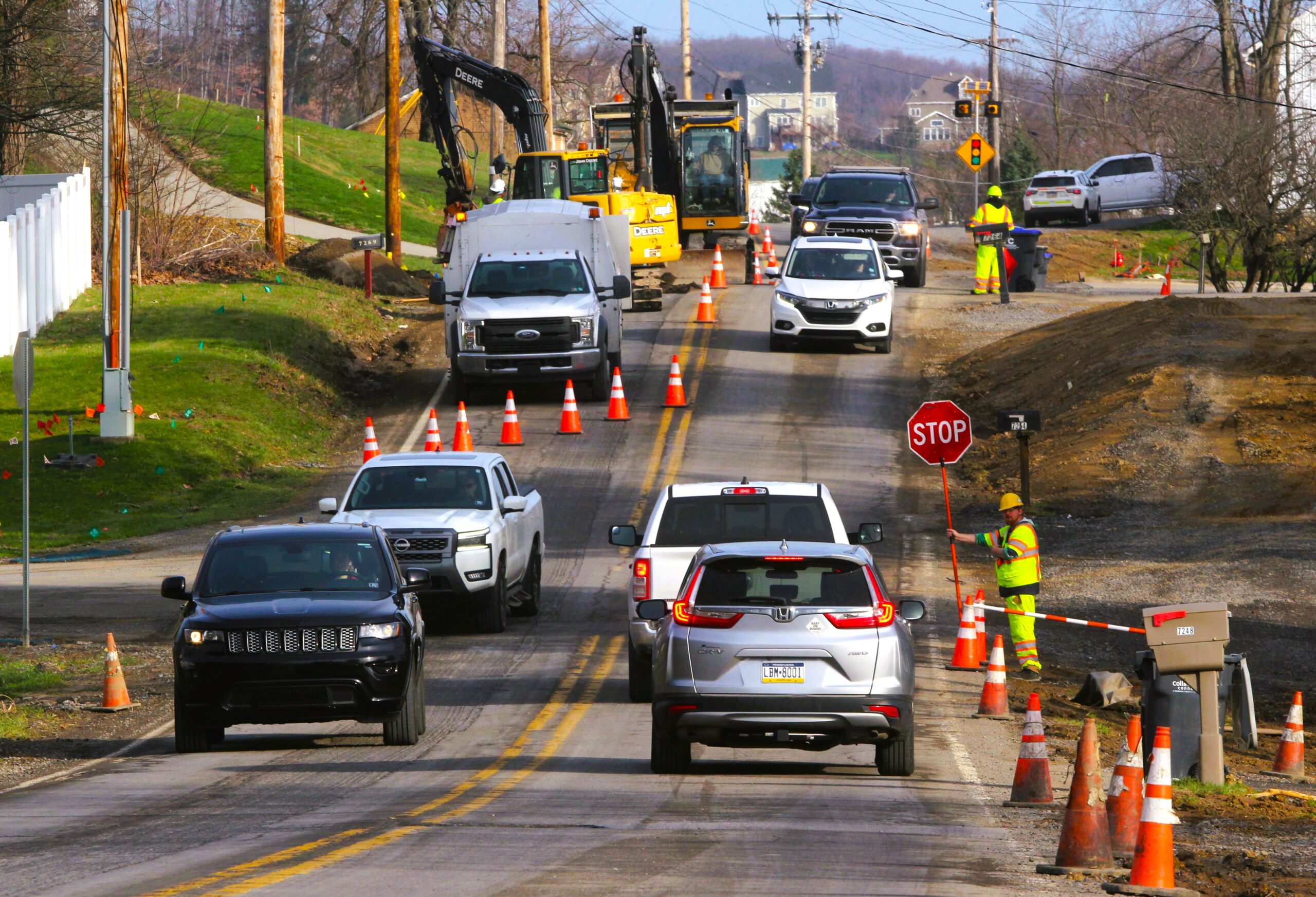
If traffic along Franklin Road has felt slower lately, you’re not imagining it—and it’s about to get more noticeable. PennDOT is now transitioning from utility work into full-scale construction.
Drivers traveling along Franklin Road in Cranberry Township are beginning to see more visible signs of progress—and more delays. According to a recent update, utility relocation—including water and gas line work—is expected to wrap up by the end of May. In the meantime, motorists should continue to expect single-lane restrictions with flagging operations between 9 a.m. and 9 p.m.
But the bigger phase is right around the corner.
Construction Phase Begins Soon
As early as April 1, crews will begin the next stage of the Franklin Road Corridor Safety Improvement Project. That phase includes:
- Installation of new drainage systems
- Addition of turning lanes
- Shoulder widening
- Edge-line rumble strips
- Sight distance improvements
Construction activity will run through December, with work hours typically scheduled from:
- 9 a.m. to 3 p.m.
- 6 p.m. to 9 p.m.
What Drivers Should Expect
If you’ve driven the corridor recently, you’ve likely already experienced backups—and that’s expected to continue.
PennDOT is warning of:
- Ongoing lane restrictions and traffic shifts
- Possible road closures and detours in future phases
- Increased travel delays, especially during active work hours
Drivers are encouraged to plan ahead and consider alternate routes when possible.
 A Long-Term Investment in Safety
The Franklin Road project is part of a broader effort to improve safety along one of the corridor’s busiest connectors—a heavily traveled stretch for drivers heading to and from Route 228.
The work is being completed by Glenn O. Hawbaker, Inc. as part of a $19.1 million project expected to continue through early November 2027.
The Bottom Line
This isn’t a quick fix—it’s a multi-year project that will bring long-term safety improvements, but short-term inconvenience.
And if the early traffic backups are any indication… drivers should expect delays to stick around—and likely get worse—before they get better.