
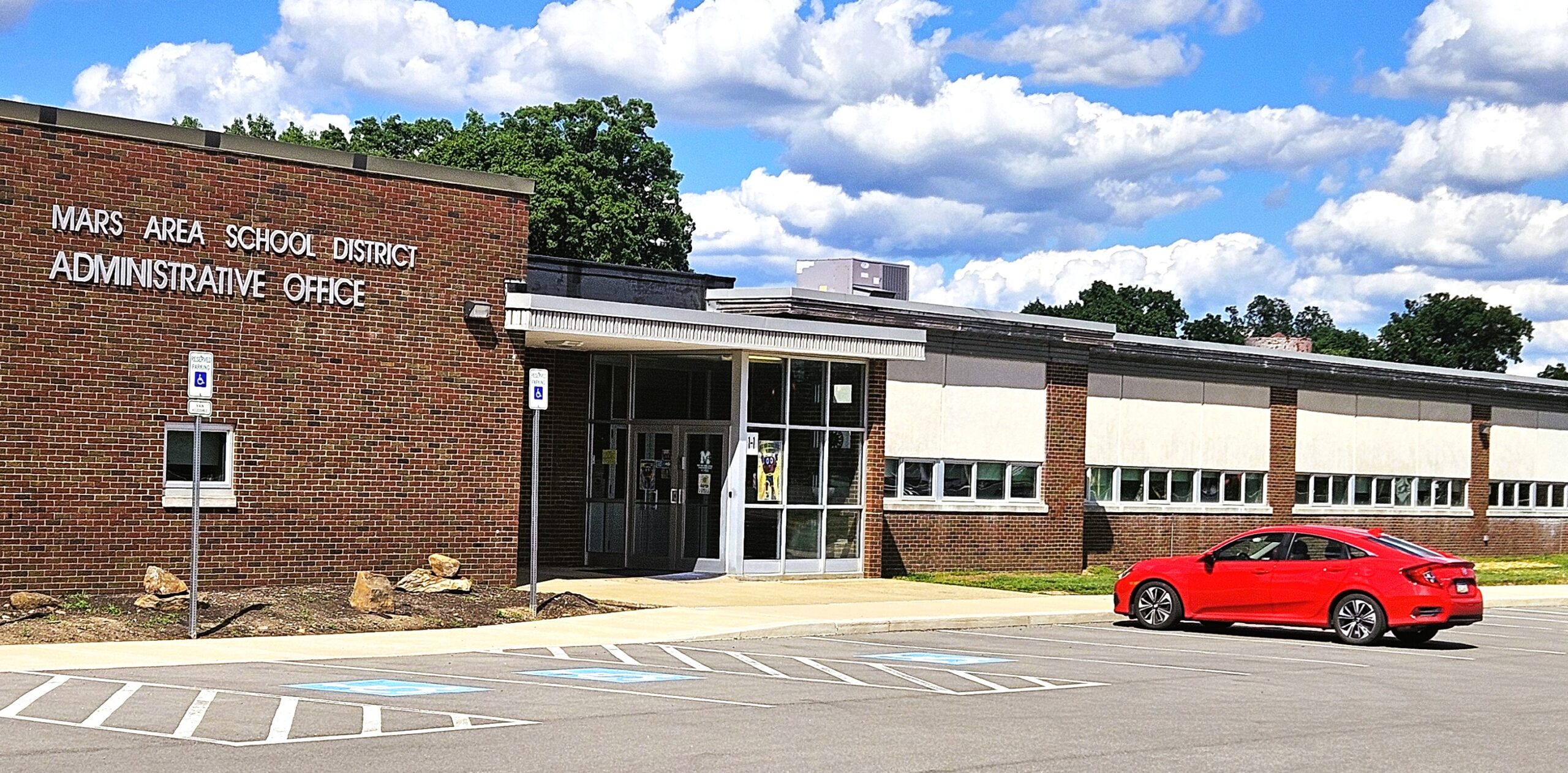
The Mars Area School District teachers’ collective bargaining agreement is scheduled to expire tomorrow, Tuesday, June 30, with major issues involving salaries, healthcare and retiree benefits still unresolved as district officials and the teachers’ union continue negotiations.
In a press release issued Friday, the Mars Area Education Association said the latest bargaining session lasted approximately 90 minutes and ended without what it described as “substantial movement” toward resolving key contract issues. In response to questions from The 228 Times, district officials said the district’s online negotiations summary remains largely accurate and provided additional clarification regarding its salary and healthcare proposals.
The latest bargaining session marked more than 20 negotiating meetings between the district and the union. Another bargaining session is scheduled for July 7 unless an agreement is reached before the current contract expires.
Compensation and the Regional Pay Gap
According to the union, one of the central issues remains teacher compensation. The MAEA points out that district administrators have received average annual salary increases of between 4.3% and nearly 5% over the past five years. The MAEA says the district’s current three-year proposal includes a 3.5% annual salary increase for teachers. The union also contends that teachers at the top of the salary schedule have averaged approximately 1.23% annual salary growth over the past five years.
The union’s press release included salary comparisons between district administrators and teachers, highlighting data that shows Mars teachers earn less than educators in neighboring school districts. Recent data from the Pennsylvania Department of Education also shows differences in average teacher salaries among neighboring school districts:
| School District | County | Average Teacher Salary |
| North Allegheny School District | Allegheny | $100,820 |
| Seneca Valley School District | Butler | $97,268 |
| Pine-Richland School District | Allegheny | $94,897 |
| Mars Area School District | Butler | $67,161 |
MAEA President Hollie Meckler previously cautioned that the pay disparity creates severe headwinds for retaining experienced staff. “It is hard to retain teachers whenever you have some teachers who could work for 10 years and go to a neighboring district and make more money on step one,” Meckler said.
Average teacher salary comparisons can be influenced by workforce demographics. Districts with younger teaching staffs often report lower average salaries because more teachers are earlier in the salary schedule.
District Says Salary Schedule Would Produce Larger Increases for Many Teachers
In a response to The 228 Times, district officials said the proposed salary schedule accompanying the district’s three-year offer shows first-year salary increases ranging from 3.81% to 6.86% for teachers who have not yet reached the top step, depending on their placement on the salary schedule and education level.
District officials said teachers at the top step would receive smaller percentage increases under the proposed salary schedule.
Healthcare and Areas of Agreement
According to the union, the district’s response to the union’s proposed five-year contract includes a 5% employee health insurance premium contribution, changes to the deductible and health plan, and language that could require teachers to pay additional costs if health insurance renewal rates exceed a specified threshold.
In response to questions from The 228 Times, district officials said their current three-year proposal does not include employee health insurance premium contributions or a healthcare cost cap. District officials said they have discussed those provisions only in connection with a potential five-year agreement because of uncertainty surrounding future healthcare costs.
District officials also said they have not proposed salary increases for a five-year agreement because those healthcare terms have not been accepted.
According to the MAEA, those changes could leave many teachers with less take-home pay during the first year of a new contract.
“Educators show up every day for our students, our families and our community,” Meckler said in the release. “We came to the table prepared to engage in meaningful negotiations. Ending a bargaining session after only 90 minutes without progress sends a troubling message about the District’s priorities.”
According to information previously released by the district, the proposed health insurance adjustments are intended to help control rapidly increasing healthcare costs. Financial updates previously released by the district reveal that annual healthcare expenditures for its self-funded health insurance program have surged from approximately $3.7 million during the 2022-23 school year to a projected $7.7 million for the 2026-27 school year.
Despite the friction over premium shares and Health Savings Account (HSA) contribution reductions, some common ground has been reached on healthcare design. Both sides have agreed to remove coverage for GLP-1 weight-loss medications and to increase deductible levels under the district’s qualified high-deductible health plan to help curb expenditures.
Non-Compensation Sticking Points
Beyond active employee compensation, the two sides remain divided over retiree health coverage and district operating policies.
According to the district’s public updates, administrators are seeking changes that would reduce retiree healthcare coverage and limit certain post-employment benefits, a move the union opposes in favor of maintaining the current benefit structure.
Additionally, teacher attendance at school open houses remains an unresolved issue in the negotiations. The district is seeking mandatory attendance, while the issue remains under negotiation between the two sides.
District Budget Pressures
The union said it decided to issue the statement because it believes previous public updates from the school district presented only part of the negotiations and lacked important context.
In response to questions from The 228 Times, district officials said the district’s online negotiations summary remains largely accurate and provided additional clarification regarding the district’s salary schedule and healthcare proposals. The board recently approved the district’s nearly $70 million 2026–27 general fund budget while keeping the real estate millage rate unchanged.
District officials have noted that competing mandates—such as required contributions to the Pennsylvania Public School Employees’ Retirement System (PSERS), which are projected to rise from $3.85 million to $4.72 million this year—severely limit the district’s capacity for larger recurring salary commitments. According to the district’s online negotiations update, the district’s 3.5% proposal would increase salary expenditures by approximately $1.96 million over three years, while the union’s proposal would increase salary expenditures by approximately $5.45 million over five years.
Next Steps
The association said it remains willing to continue bargaining and hopes an agreement can be reached before the current contract expires. According to Meckler, the two sides are scheduled to resume negotiations on Tuesday, July 7. Unless an agreement is reached before June 30, the current collective bargaining agreement will expire before those talks occur.
Meckler said the union is not planning any immediate changes in its current approach, though a strike remains a legal possibility if an agreement cannot be reached before the school year resumes in August.
“We will make an official announcement if we decide to move in a different direction,” Meckler said. “But right now we have hopes that the community will reach out and offer their support for the teachers who have done so much for this community.”